An authoritative analysis of precision load-cell technology, global supply resilience, and the requirements of commercial and consumer espresso environments.
In the global specialty coffee market, the transition from simple volumetric extraction to highly precise mass-based brewing is fully established. Modern coffee extraction requires precise monitoring of the water-to-coffee ratio, contact time, and dynamic flow rates. A deviation of just 0.2 grams of coffee grounds or 1.0 gram of water can alter the TDS (Total Dissolved Solids) projection and extraction percentage, affecting the consistency and flavor profile of the espresso.
Consequently, digital coffee scales have transitioned from simple kitchen accessories to complex, IoT-enabled metrology instruments. Utilizing 24-bit Analog-to-Digital Converters (ADCs) and high-speed microcontroller units (MCUs), modern scales monitor real-time flow rate curves, enabling baristas and industrial machines to track extraction dynamics with millisecond-level responsiveness.
"Information Gain in Coffee Extraction: Precision measurement is the foundational standard of specialty brewing. Digital scales utilizing advanced load cells eliminate the variables that compromise extraction quality."
These performance markers define the high-end industrial and commercial scales coming out of China's advanced manufacturing hubs today.

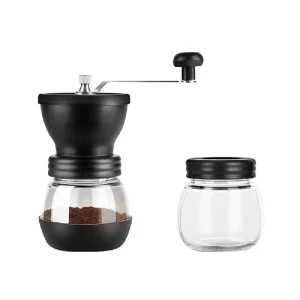
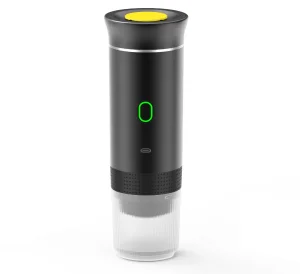
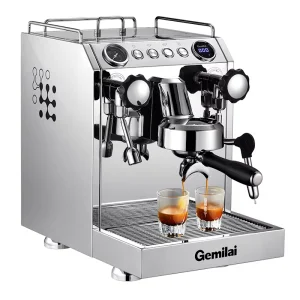
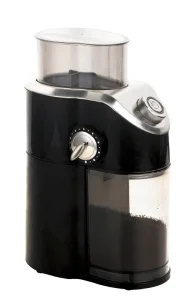
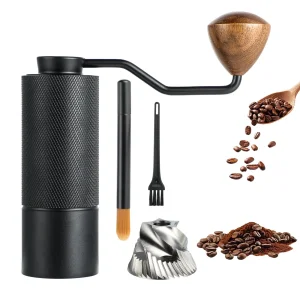
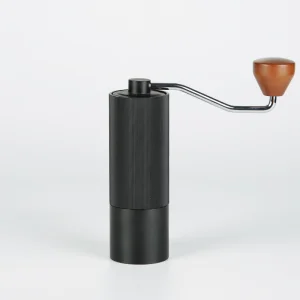
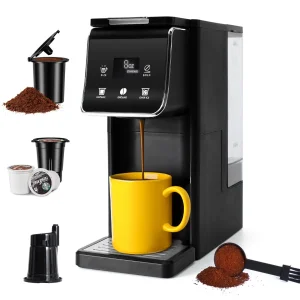
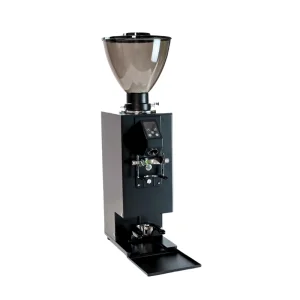
Jiangsu Sophia Electrical Appliance Co., Ltd. is an innovative household small appliance manufacturer that integrates design, production, sales, and after-sales service. Since its establishment, the company has developed and produced blade-type multi-function grinders, manual grinders, portable grinders, fully automatic grinders, and portable coffee machines, obtaining relevant product patent certificates for its proprietary designs.
By leveraging its expertise in precision motors and grinding mechanics, Sophia has expanded its manufacturing capabilities to include advanced digital coffee scales. These scales integrate seamlessly into the modern barista's workflow, providing the precise mass feedback necessary to optimize grind size adjustments on the fly.
Through robust quality control and investments in automated production lines, Sophia ensures that every digital scale and appliance meets international standards for durability, thermal insulation, and sensor stability under demanding commercial conditions.


How Eastern China's manufacturing clusters optimize the production of digital weighing systems, sensors, and structural engineering components.
Industrial load cells require cleanroom assembly and temperature-controlled calibration. Our partner factories utilize automated calibration fixtures to guarantee uniform accuracy across production batches.
Modern digital coffee scales fuse weight data with time variables and firmware-calculated flow rates, generating data streams that transmit seamlessly via Bluetooth BLE to mobile apps.
To survive hot water spills and cleaning, scales undergo rigorous thermal shock testing, load-limit testing, and water immersion procedures to ensure an IPX6-rated seal.
The concentration of raw material processors, precision injection molders, and semiconductor packagers in China allows manufacturers like Jiangsu Sophia to shorten development cycles. By utilizing highly integrated domestic supply chains, ODM factories reduce lead times for custom tooling and scale calibration components from months to weeks. This clustering effect directly benefits international buyers through lower unit costs and standardized replacement parts.
Furthermore, standardizing load cell platforms allows factories to manufacture versatile variations—ranging from simple, single-button travel scales to high-end, dual-sensor commercial brewing stations. This modularity ensures high manufacturing efficiency, stable yield rates, and reliable performance, even during large-scale global rollouts.
Developing procurement strategies for retail distributors, commercial roasters, and specialty cafe operators.
For procurement directors managing retail portfolios or commercial cafe supply lines, assessing the technical architecture of a digital coffee scale is crucial. Key specifications to consider include:
1. Commercial Espresso Stations: Scales designed for espresso drip trays must feature compact footprints, low profiles (under 20mm), auto-tare functions, and robust water protection to withstand purge water and vibration.
2. Pour-Over Labs: Specialty labs require dual-weight monitoring (simultaneous measurement of brew water input and extraction output) to log precise brewing curves and train baristas.
3. Domestic Kitchens: Consumer markets favor design aesthetics, hidden LED dot-matrix displays, intuitive interfaces, and Bluetooth integration for interactive brewing guides.
Addressing the core technical, logistical, and commercial inquiries raised by global B2B buyers and importers.
Drift occurs when temperature variations expand or contract the load cell, or when humidity enters the internal circuitry. High-quality factories mitigate this by using high-grade temperature-compensated strain gauges, physical heat shielding, and protective hydrophobic conformal coatings on the PCB.
Jiangsu Sophia offers full-service customization, including custom enclosure designs, modified firmware (adjusting auto-off durations and buzzer sounds), custom LCD/LED UI design, and localized app integration via Bluetooth BLE API documentation sharing.
Importers must verify compliance with FCC (for electromagnetic compatibility in the US), CE-EMC and CE-RoHS (for European safety and hazardous material standards), and WEEE directives for electronic waste disposal. Food-contact components like silicone pads must also pass FDA or LFGB certification.
Flow-rate calculation (measured in grams per second) informs the barista of the pour consistency. In smart scales, this metric is processed by firmware and plotted in real-time, helping users spot channelization and improve extraction repeatability.
Standard MOQs for custom logo printing and customized packaging range from 500 to 1,000 units. For full ODM custom tooling, lead times range from 45 to 60 days, covering industrial design, 3D prototyping, mold development, and final pilot runs.
 Sophia Electric Appliance