High-performance coffee machines and vending systems customized for the administrative centers and business zones of Equatorial Guinea.
In the contemporary global economy, the design of the corporate workspace serves as a direct indicator of organizational health, employee satisfaction, and operational efficiency. In Central Africa, and specifically in Equatorial Guinea, a unique economic evolution is taking place. Driven by rapid infrastructural expansion in key administrative hubs such as Malabo (Malabo II corporate district), Bata, and the modern city of Ciudad de la Paz (formerly Oyala), multinational oil and gas entities, banking institutions, and diplomatic missions are investing heavily in premium office standards.
Historically, workplace refreshments were limited to basic instant formulas. Today, modern business spaces demand highly automated, hybrid, and hygienic solutions that parallel the amenities found in London, New York, or Shanghai. However, importing commercial machinery to West-Central Africa presents specific environmental and logistical challenges. Equipment must withstand tropical climates characterized by high relative humidity, operate reliably amidst fluctuations in localized electrical grids, and feature filtration systems that handle varied municipal water qualities.
Globally, the Office Coffee Service (OCS) market is expanding rapidly, with a projected compound annual growth rate (CAGR) exceeding 6.8%. This surge is largely propelled by the integration of IoT telemetry—allowing remote status monitoring, automated reordering of ingredients, and contactless payment models. As corporate offices in Equatorial Guinea align with international standards, the necessity of securing reliable, premium manufacturing partners becomes paramount.
China remains the epicenter of advanced commercial beverage systems development. Chinese manufacturers leverage highly integrated industrial clusters, advanced automated assembly processes, and rapid prototyping capabilities. The result is a family of coffee equipment that achieves an unparalleled balance of advanced technological features, structural reliability, and cost-efficiency. B2B procurement managers from Malabo to Munich benefit from this supply chain efficiency, gaining custom OEM/ODM solutions tailored to exact local specifications.
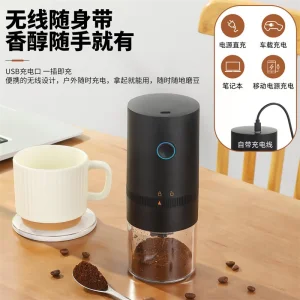
Jiangsu Sophia Electrical Appliance Co., Ltd. is an innovative household small appliance manufacturer. The company integrates design, production, sales and after-sales service. Since its establishment, the company has successively developed and produced blade-type multifunction grinders, manual grinders, portable grinders, fully automatic grinders, and portable coffee machines, and obtained relevant product patent certificates in one fell swoop.
Jiangsu Sophia's manufacturing facilities utilize strict quality control protocols, assuring that the raw materials and electronics comply with major global regulatory standards. By continuous investment in research and development, Sophia ensures that its grinders and coffee preparation solutions meet the demands of both commercial offices and boutique cafes, bridging the gap between precision grinding and brewing consistency.
To make an informed procurement decision, businesses must analyze their specific spatial and consumption requirements. Here, we outline the primary deployment scenarios within the regional markets of Equatorial Guinea:
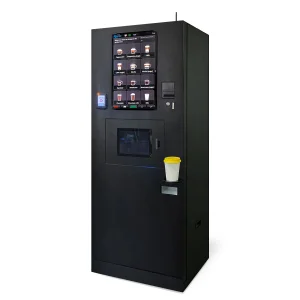
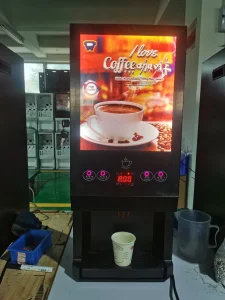
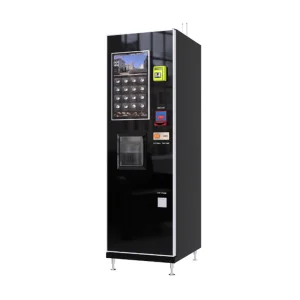
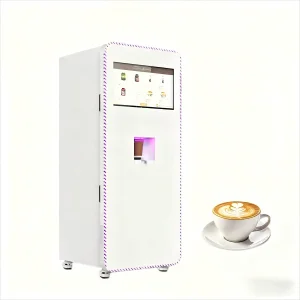
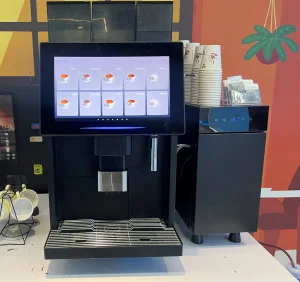
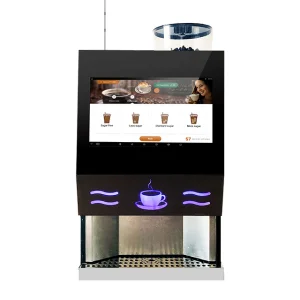
Multinational headquarters demand self-service beverage stations that require minimal staff oversight. Automated stand-alone coffee-and-milk vending machines are ideal here, allowing employees to select freshly ground espressos or hot chocolates via modern touch interfaces.
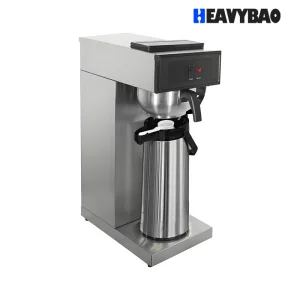
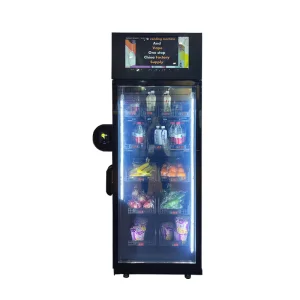
Government offices in Oyala and Bata prioritize high capacity and speed. Drip coffee brewing systems capable of producing continuous batches are deployed in these environments alongside smart refrigerators, enabling staff to access cold and hot beverages during long administrative hours.
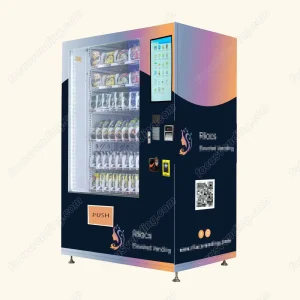
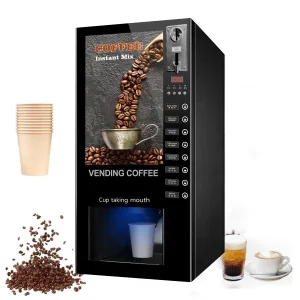
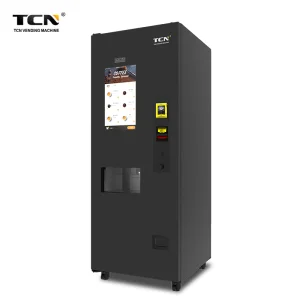
Airports and maritime terminals require payment-integrated vending machines. Using integrated coin, bill, or smart card readers, these public-facing units generate a reliable revenue stream while supplying fresh beverages to high volumes of international travelers.
Explore our core range of professional coffee machines, grinders, cup formers, and vending kiosks optimized for commercial use.
Corporate procurement strategies in the OCS domain are transitioning toward smart, sustainable, and sensory-driven systems. This evolution involves three major fronts:
Modern offices operate on lean scheduling. Modern vending networks utilize IoT gateways to transmit real-time telemetry data. Facilities managers in Malabo can log into online dashboards to track daily cup counts, verify temperature readings, and plan maintenance visits before a machine fails. This reduces operational downtime and optimizes ingredient supply routes.
With corporate social responsibility (CSR) programs expanding across Africa, energy-efficient commercial appliances are in high demand. Commercial coffee boilers now incorporate high-density thermal insulation and smart standby modes that reduce energy consumption by up to 35% during non-working hours.
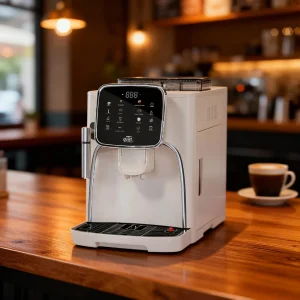
Post-pandemic office hygiene standards require minimal physical contact and automated sanitation. Top-tier espresso systems utilize auto-flushing steam arms and programmed cleaning cycles to clean internal milk lines and brewing assemblies, ensuring food safety compliance and protecting taste integrity.
Specialized grinders, auto-clean dispensers, and OEM-configured systems completing the coffee production pipeline.
Technical answers regarding importing, electrical compatibility, and maintenance for office coffee systems in Equatorial Guinea.
Equatorial Guinea generally operates on a standard voltage of 220V with a frequency of 50Hz. All of our commercial hot beverage equipment, smart vending machines, and paper cup machinery can be manufactured with dedicated 220V/50Hz single-phase or three-phase power configurations. This ensures plug-and-play capability and minimizes the risk of transformer issues in local installations.
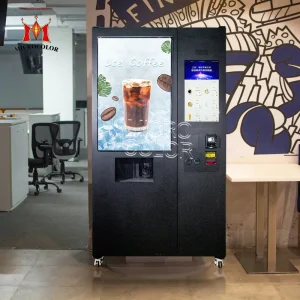
Our smart coffee vending systems support MDB (Multi-Drop Bus) protocol interfaces. This allows us to pre-install or configure payment options, including coin selectors, bill acceptors, and contactless card readers. We also work with regional distributors to configure mobile money QR-code based transactions, matching localized fintech platforms.
Typically, manufacturing and testing take 15 to 25 days depending on the customization requested. Sea freight transit from major Chinese ports (such as Ningbo or Shanghai) to the Port of Malabo or Port of Bata takes approximately 35 to 45 days. We provide comprehensive documentation support, including invoices, packing lists, CE/RoHS certificates, and Bills of Lading to simplify customs clearance.
High humidity can cause coffee powder clumpings and damage electronic circuit boards. Our commercial office equipment uses sealed, airtight storage canisters for dry ingredients (such as milk powder, sugar, and cocoa). Additionally, our internal control boards are treated with a moisture-resistant conformal coating to prevent short circuits and oxidation.
Yes. Through Jiangsu Sophia Electrical Appliance Co., Ltd., we offer comprehensive OEM and ODM services. We can customize the grinder casing colors, silkscreen your corporate logo directly onto the chassis, design tailored packaging boxes, and program customized software boot screens to match your corporate identity.
To protect internal heating elements from mineral scaling and ensure beverage consistency, we recommend using a multi-stage water filtration system (sediment filter + activated carbon + scale inhibitor). For regions in Equatorial Guinea with high mineral counts, integrating a reverse osmosis (RO) system with a remineralization cartridge guarantees the longest service life for your boiler.
Yes, we supply a detailed technical manual, electrical schematics, and video maintenance guides with every shipment. We also provide a recommended list of critical spare parts (such as valves, heating elements, and silicone tubes) for B2B buyers to stock in Malabo or Bata to ensure immediate servicing.
For standard configurations, the MOQ is 1 unit. For customized body graphics, software integration, or specific coin/card acceptor adaptations, the MOQ typically ranges between 5 to 10 units. Please reach out to our sales department via the contact portal for a personalized commercial quote.
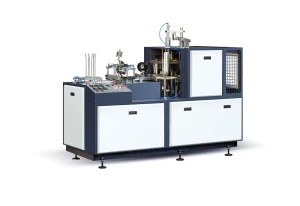
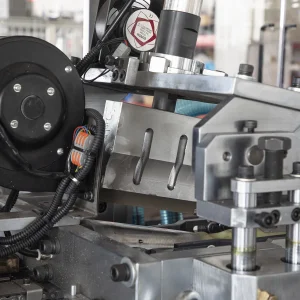
Our High Speed Intelligent Paper Cup Equipment LF-70 features a fully automated control panel, automated lubrication, and optical sensor error detection. While basic operator training is required for material loading and machine supervision, the automated system runs independently, minimizing the need for manual adjustments during production.
The fresh milk coffee vending machine includes a built-in compressor-based refrigerator with precise digital temperature control. The insulation is designed to maintain a consistent internal temperature of 2°C to 6°C even when external room temperatures reach up to 38°C, preventing spoilage and ensuring compliance with sanitation standards.
 Sophia Electric Appliance