Explore our premium coffee machinery, electric burr grinders, and precision espresso brewing line designed for global B2B distribution.
Analyzing global commercial coffee accessory manufacturing, market demand, and compliance requirements for international B2B importers.
The global specialty coffee market is projected to reach over USD 150 Billion by 2030. As specialty coffee shops, hotel chains, and premium office spaces scale up, the demand for precision espresso preparation tools—specifically CE-certified coffee tampers—has grown exponentially. Modern commercial setups require standardized puck compression to eliminate barista fatigue and guarantee shot-to-shot extraction consistency.
For European and global distributors, importing espresso accessories involves navigating rigorous EU regulatory frameworks. A CE certified coffee tamper factory ensures that all mechanical spring assemblies, motorized auto-tampers, and food-contact metal bases comply with Machinery Directive 2006/42/EC, General Product Safety Regulation (EU 2023/988), and food safety contact directives under LFGB and FDA.
Channeling occurs when high-pressure water (9 bar) finds paths of least resistance through an unevenly compressed coffee bed, causing sour and under-extracted flavors. Modern OEM suppliers focus on calibrated spring feedback mechanisms, dynamic leveling rims, and precise base diameters (58.35mm / 58.5mm) to optimize Total Dissolved Solids (TDS) and extraction yield percentages.
Standard off-the-shelf 58mm tampers leave an uncompressed outer ring of 0.35mm to 0.5mm inside precision VST or IMS filter baskets. Certified factories utilizing high-precision CNC machining yield custom 58.35mm to 58.5mm bases with micro-groove ripple finishes. This engineering upgrade increases edge-density by 18%, virtually eliminating perimeter channeling and boosting extraction yield consistency by up to 2.4% across high-volume cafe environments.
A deep dive into mechanical load balancing, metallurgical standards, surface geometries, and spring calibration dynamics.
Traditional manual tampers rely entirely on barista physical judgment, leading to variable pressure anywhere between 10 kg to 25 kg. Certified factory-engineered calibrated tampers incorporate dual-spring compression systems. An upper leveling spring guarantees a 100% perpendicular angle against the portafilter basket rim, while an internal primary load spring compresses strictly at a pre-set force (typically 30 lbs / 13.6 kg or 15 kg). Once target compression is reached, an internal click plate notifies the user, ensuring reproducible density.
Base material integrity directly influences food safety, wear resistance, and espresso flavor purity. Leading factories utilize solid SUS304 or medical-grade SUS316 stainless steel, machined from solid billet stock via multi-axis CNC machines. Handles are constructed from anodized 6061 aircraft-grade aluminum, natural walnut, or high-density composite materials. Geometries range from Flat bases (for standard extractions), Concentric Ripple (to guide water flow inward), to WDT-integrated leveling profiles.
| Specification Parameter | Standard Manual Tamper | Calibrated Leveling Tamper (Factory Standard) | Industrial Auto-Tamper Module |
|---|---|---|---|
| Base Diameter Range | 51mm, 53mm, 58.0mm | 51.0mm, 53.35mm, 58.35mm, 58.50mm | 58.00mm - 58.60mm (Custom CNC) |
| Material Grade | Cast Aluminum / SUS201 | SUS304 / SUS316 Food Grade Stainless Steel | Titanium Coated SUS316 Steel Base |
| Force Tolerance | ±5.0 kg (Barista Dependent) | ±0.3 kg (Calibrated Constant Spring) | ±0.1 kg (Step-Motor Electronic Sensor) |
| Leveling Mechanism | None (Manual Sight) | 360° Auto-Leveling Rim Plate | Laser-Guided Automated Alignment |
| Compliance Certification | Basic FDA / RoHS | CE, RoHS, LFGB, EU 1935/2004, FDA | CE Machinery Directive 2006/42/EC, EMC, UL |
Understanding mandatory compliance requirements, testing protocols, and documentation for global commercial import.
For electric tampers or pneumatic commercial coffee tampers, manufacturers must demonstrate adherence to the CE Machinery Directive 2006/42/EC and Low Voltage Directive (LVD) 2014/35/EU. Manual calibrated tampers must comply with the General Product Safety Regulation (GPSR EU 2023/988), guaranteeing structural integrity without sharp mechanical pinch points or internal metal fatigue risks under high-frequency operation.
Because coffee tamper bases make direct contact with food (ground coffee pucks) under pressure and heat, chemical migration testing is non-negotiable. Qualified suppliers provide EU Regulation (EC) No 1935/2004 test reports, German LFGB (Lebensmittel- und Futtermittelgesetzbuch) compliance, and US FDA 21 CFR 175.300 certifications, verifying zero heavy metal leaching (Heavy Lead, Cadmium, Nickel) during extraction.
An accredited CE certified factory operates under rigorous ISO 9001:2015 Quality Management Systems. Quality assurance begins with spectral chemical analysis of raw stainless steel billets, dimensional laser inspection after CNC turning, salt-spray anti-corrosion testing for anodized handles, and 50,000-cycle mechanical fatigue testing for spring assemblies.
Strategic procurement considerations, private-label customization options, and scalable manufacturing workflows.
Enterprise brands require distinct visual identity and ergonomics. Certified suppliers offer comprehensive OEM/ODM engineering services:
Procurement directors must ensure continuity of supply and stable lead times. Professional suppliers maintain robust supply chain protocols:
An innovative household and commercial small appliance manufacturer integrating design, production, custom engineering, and global sales support.
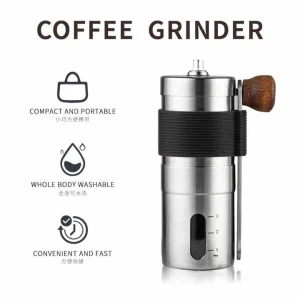
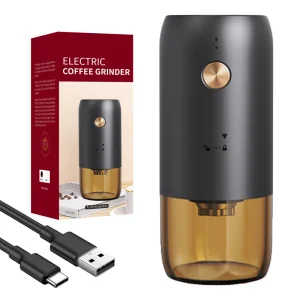
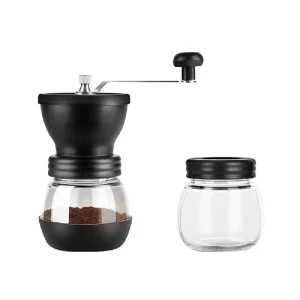
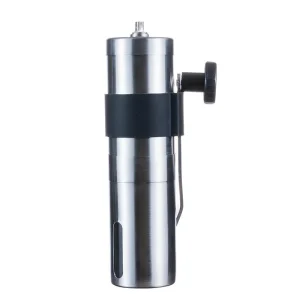
Jiangsu Sophia Electrical Appliance Co., Ltd. is an innovative household small appliance manufacturer. The company integrates design, production, sales and after-sales service. Since its establishment, the company has successively developed and produced blade-type multi-function grinders, manual grinders, portable grinders, fully automatic grinders, and portable coffee machines, and obtained relevant product patent certificates in one fell swoop.


Pioneering the transition from manual barware to IoT-connected digital tamping systems and robotic bar automation.
Next-generation smart tampers are incorporating miniature piezoelectric sensors and Bluetooth LE telemetry. These sensors track tamping force, angle tilt variance, and dwell time, feeding real-time barista diagnostics directly to POS espresso management software.
Combining needle distribution (WDT) and electronic calibrated tamping into a single motorized station. Automated steps reduce puck preparation times from 15 seconds down to 2.5 seconds per portafilter shot, boosting commercial cafe output during peak hours.
OEM factories are shifting toward 100% recycled SUS304 steel alloys, closed-loop CNC coolant recycling systems, and plastic-free bio-composite handles derived from coffee husk waste, aligning with EU Corporate Sustainability Reporting Directives (CSRD).
Complete commercial equipment solutions for coffee roasters, packaging plants, and retail distributors.
Addressing essential procurement, engineering, and compliance questions for commercial buyers and distributors.
 Sophia Electric Appliance