Coffee flavors and syrups sit at the intersection of beverage science, sensory engineering, and supply-chain logistics. Understanding this landscape is the first step toward a reliable OEM/ODM partnership.
Global demand for flavored coffee syrups continues to expand as specialty cafés, quick-service restaurants (QSRs), and ready-to-drink (RTD) brands differentiate through taste. The category now spans caramel, vanilla, hazelnut, and seasonal profiles, alongside clean-label and sugar-reduced variants demanded by health-conscious consumers.
Commercial syrup manufacturing requires precise brix control, pH stabilization, natural and nature-identical flavor systems, and cold-fill or hot-fill processing. A credible OEM/ODM manufacturer invests in laboratory validation, shelf-life testing, and consistent batch-to-batch reproducibility — the backbone of brand trust.
From 750ml café pump bottles to 1-gallon bulk jugs, PET, HDPE, and bag-in-box formats dominate. OEM/ODM partners must offer customizable labeling, private-label branding, and export-compliant packaging that satisfies FDA, EU, and regional food-safety regulations.
China remains the world's most vertically integrated manufacturing ecosystem for coffee equipment and consumables. The efficiency advantage is not merely labor cost — it is cluster density, rapid prototyping, and mature export infrastructure.
Raw-material sourcing, molding, assembly, quality inspection, and packaging occur within tightly coordinated industrial clusters. This shortens lead times dramatically and reduces the friction of multi-vendor coordination that plagues Western supply chains.
Sampling cycles measured in days rather than months allow brands to iterate formula and packaging quickly. Chinese factories with dedicated R&D teams can move from concept to pilot production with remarkable speed while maintaining ISO and HACCP alignment.
Economies of scale in procurement and mature tooling ecosystems let manufacturers deliver competitive pricing without compromising on food-grade standards. This balance is the core reason global buyers continue to source from China for both equipment and consumables.
Flavors and syrups are not abstract commodities — they are performance ingredients in real commercial environments. Understanding where they are used sharpens procurement decisions.
Flavor pumps, seasonal menus, and signature drinks rely on consistent syrup concentration. Barista-friendly packaging and stable viscosity are critical to workflow efficiency.
Syrups extend into mocktails, cold brew, and dessert beverages. Multi-use formats reduce SKU proliferation while expanding menu creativity.
Buffet and banquet coffee service demands reliable, easy-to-dispense formats with long shelf life and predictable flavor release.
Office coffee service operators favor compact packaging and shelf-stable formulations that integrate with automated and semi-automatic equipment.
Private-label consumer bottles require regulatory-compliant labeling, attractive design, and consistent quality for repeat purchase behavior.
Ready-to-drink and vending applications demand precise dosing and stability under temperature fluctuations, making formulation robustness essential.
Consumers scrutinize ingredient lists. Manufacturers are responding with natural sweeteners, reduced-sugar systems, and transparent sourcing narratives — all while preserving sensory performance.
Fully automatic coffee machines and capsule systems require syrups and flavors engineered for precise automated dosing, driving closer collaboration between ingredient and equipment suppliers.
Recyclable PET, bag-in-box, and concentrate formats reduce shipping weight and carbon footprint — increasingly a tender requirement for multinational buyers.
Regional taste preferences — from Southeast Asian pandan to Middle Eastern cardamom — demand agile ODM development and small-batch flexibility.
FSMA, EU food law, and halal/kosher certifications are becoming baseline expectations. Documentation quality increasingly decides supplier selection.
Buyers now evaluate suppliers through digital catalogs, sample requests, and online verification — making a credible, information-rich web presence a competitive necessity.
Enterprise procurement teams evaluate OEM/ODM partners against a structured checklist. Anticipating these requirements accelerates qualification.
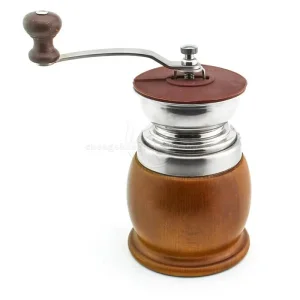
Jiangsu Sophia Electrical Appliance Co., Ltd. is an innovative household small appliance manufacturer. The company integrates design, production, sales and after-sales service. Since its establishment, the company has successively developed and produced blade-type multi-function grinders, manual grinders, portable grinders, fully automatic grinders, and portable coffee machines, and obtained relevant product patent certificates in one swoop.
Because Sophia manufactures both coffee equipment and grinders, we validate syrup and flavor performance against real brewing and dosing hardware — reducing integration risk for buyers.
We provide batch-level CoAs, retained-sample policies, and compliance documentation aligned with destination-market requirements — an information gain that shortens audits.
Field performance data from equipment operators feeds back into formulation refinement, enabling continuous improvement across the product lifecycle.
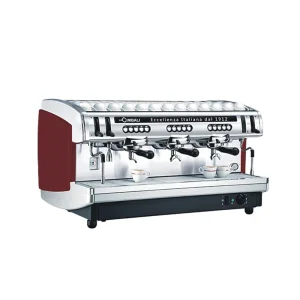
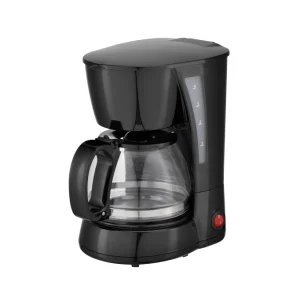
Our manufacturing depth spans manual and automatic coffee equipment — the hardware platform on which flavor and syrup systems perform.
Yes. We support both OEM (manufacturing to your recipe and specification) and ODM (developing formulations from concept) models, including private-label packaging and labeling compliance.
Every batch undergoes brix, pH, viscosity, and sensory evaluation. A Certificate of Analysis accompanies each shipment, and retained samples are archived for traceability.
Facilities operate under ISO 9001 and HACCP-aligned systems, with FDA registration and documentation support for EU, halal, and kosher requirements depending on destination market.
MOQ varies by formulation and packaging format. We accommodate pilot-scale orders for market testing while offering structured scale-up pricing for volume commitments.
Yes. Provide a reference sample and our food scientists will conduct sensory and analytical reverse-engineering to develop a matching formulation within your target cost envelope.
We support FOB and CIF terms with standard lead times communicated per order. Container optimization and export documentation are handled by our logistics team.
Yes. We offer recyclable PET, bag-in-box, and concentrate formats that reduce shipping weight and carbon footprint, aligned with multinational sustainability tenders.
Sophia manufactures coffee machines and grinders, enabling us to validate syrup dosing and flavor performance against real hardware — reducing integration risk for buyers.
Choosing an OEM/ODM partner is a strategic decision that affects brand reputation, regulatory standing, and margin structure. Sophia's combination of manufacturing depth, documentation rigor, and export experience positions us as a dependable partner for enterprises seeking to scale coffee flavor and syrup programs across global markets.
From initial sampling through full-container production, our process is designed for transparency: clear specifications, validated quality checkpoints, and responsive communication. This is how we deliver information gain that goes beyond the spec sheet — the difference between a supplier and a long-term manufacturing ally.
We invite global enterprise buyers, private-label brands, and equipment distributors to evaluate Sophia for their next coffee flavor, syrup, or equipment program.
 Sophia Electric Appliance