How to store coffee beans to keep them fresh is less about buying an expensive gadget and more about controlling four everyday threats: air, heat, light, and moisture. Coffee consultant and author Scott Rao’s practical guidance is straightforward: protect roasted beans from these elements. A cupboard away from the oven works better than a sunny counter. Keep the bag sealed. Small details matter.
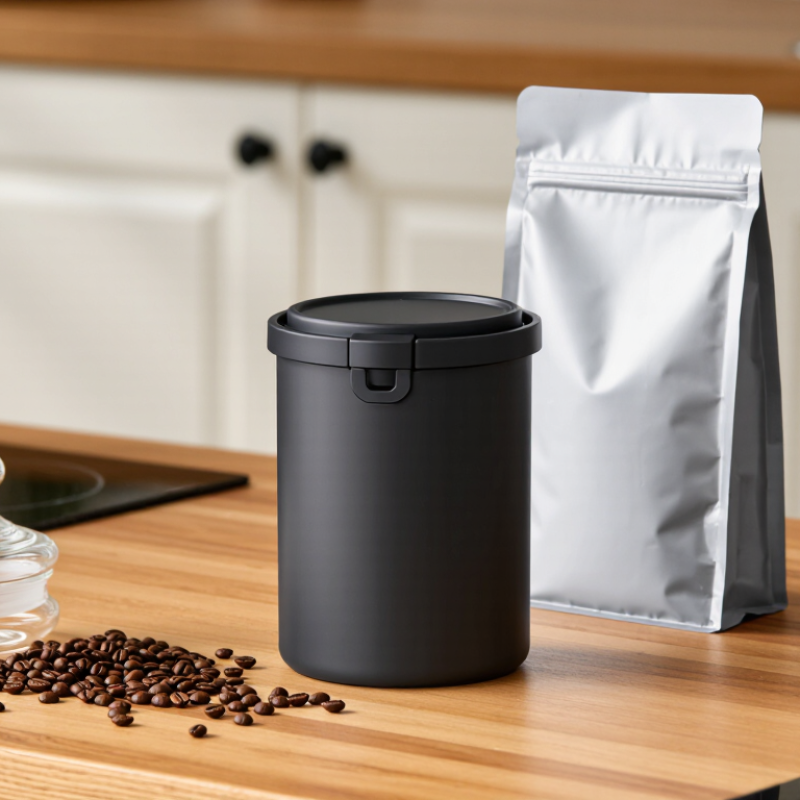
Choose an airtight, opaque container, or use the resealable valve bag the beans came in. Press out excess air without crushing the beans, then close the seal firmly. Store the container in a cool, dry cupboard—not beside a kettle, stove, or sink. Avoid the refrigerator: opening a cold container can introduce condensation, and nearby foods may lend their aromas. Freezing can work for longer storage, but divide beans into sealed portions and thaw each portion before opening it. Do not repeatedly freeze and thaw the same supply.
Buy an amount you can finish while the beans still taste lively. Whole beans generally hold their character longer than ground coffee, so grind just before brewing. There is no perfect container, and even careful storage cannot stop freshness from fading over time. I have also kept beans in a “sealed” bag that was not sealed very well; the cup tasted flatter than expected. A useful habit is to note the roast date, keep storage simple, and adjust when your coffee loses its aroma. That is the practical heart of How to store coffee beans to keep them fresh: limit exposure, avoid temperature swings, and use the beans while they still smell vivid.
Understand What Causes Coffee Beans to Lose Freshness
Roasted beans do not become stale on a fixed schedule. Their aroma fades as volatile compounds escape, while oxygen reacts with oils and aroma molecules. The National Coffee Association’s coffee-storage guidance identifies air, moisture, heat, and light as key threats. A warm kitchen shelf beside the oven is therefore a poor choice. Humidity also matters: beans can absorb moisture and pick up nearby odors.
Grinding speeds the change. More exposed surface means more contact with oxygen, so ground coffee loses aroma faster than whole beans. Research published in the Journal of Agricultural and Food Chemistry has tracked changes in roasted coffee’s volatile compounds during storage, showing why packaging and storage conditions affect aroma. The practical detail is easy to miss: a container may look sealed but still admit air whenever opened. Use a clean, airtight, opaque container, and buy an amount you can finish while the aroma remains vivid. Not every kitchen routine is ideal; I still forget to close the lid sometimes. Keep beans away from sunlight, steam, and strong-smelling foods, and avoid repeatedly moving them between cold and warm places. Freshness is gradual, not a switch.
How to Store Coffee Beans to Keep Them Fresh
Why it matters: Heat, oxygen, light, and moisture speed the loss of coffee aroma. Store beans in an airtight, opaque container in a cool, dry cupboard. Refrigerators can expose beans to moisture and food odors; freezing can work for longer storage when beans are sealed airtight and portioned to avoid repeated thawing. Temperatures shown are representative, not freshness ratings.
Choose an Airtight, Opaque Container
Coffee beans begin losing aroma after roasting, and exposure to air speeds that change. Choose an airtight, opaque container with a snug-fitting lid. Light matters. Sunlight and bright kitchen lamps can warm the beans and dull their flavor over time. A ceramic canister or an opaque food-safe container works well; a clear jar is less suitable unless kept inside a dark cupboard.
Check that the lid closes evenly and that the container is clean and completely dry before filling it. Even a small amount of trapped moisture can affect the beans. Keep the container away from the stove, oven, and sink, where heat and steam are common. A cool, dry cupboard is usually practical. Keep it simple.
Buy an amount you can use while the beans still taste lively, and open the container only when needed. Each opening lets in fresh air, though there is no need to handle the beans with elaborate care. If the original bag has a reliable resealable closure and an opaque lining, it may be good enough. Storage habits are not always perfect; a convenient container you actually close is better than an ideal one left open on the counter.
Store Beans in a Cool, Dry, Dark Place
Keep roasted coffee beans in an opaque, airtight container inside a cool, dry cupboard. Choose a shelf away from the oven, kettle, and sunny windowsill; even a warm cabinet can expose beans to repeated heat. Light is a problem. So is moisture. The International Coffee Organization’s Resolution 420 sets a 12.5% maximum moisture benchmark for exportable green coffee. That figure applies to green beans, not roasted beans, but it shows why keeping moisture out matters. Use a clean, completely dry container, and close it promptly after each scoop.
Avoid storing beans beside a sink or in a refrigerator used every day. Temperature swings can cause condensation when cold beans meet warm air. I’ve found that an easy-to-reach cupboard often works better than a “perfect” spot I forget to use. Buy an amount you can finish while the aroma is still lively, and note the roast date on the container. If you freeze extra beans, seal them in small portions and thaw each portion unopened before use. A little imperfect: containers get opened, and kitchens get warm. Keeping them away from heat, light, and damp air still reduces avoidable exposure.
How to Store Coffee Beans to Keep Them Fresh? - Store Beans in a Cool, Dry, Dark Place
| Storage factor |
Recommended practice |
Why it helps |
Avoid |
| Temperature |
Keep beans at a comfortably cool, stable room temperature, away from ovens and other heat sources. |
Heat can speed the loss of coffee’s aromatic compounds. |
Warm cupboards, sunny windowsills, and places near cooking appliances. |
| Light |
Store beans in an opaque container or a closed cupboard. |
Limiting light exposure helps protect flavor quality. |
Clear containers left in direct sunlight or bright light. |
| Moisture |
Choose a dry storage spot and keep the container tightly closed. |
Coffee readily absorbs moisture and nearby odors, which can affect its quality. |
Damp areas, open containers, and storing beans beside a sink or kettle. |
| Air exposure |
Use an airtight container sized for the amount of coffee you have. |
Reducing repeated exposure to air helps slow staling. |
Leaving a bag unsealed or transferring beans into a large, mostly empty container. |
| Container material |
Use a clean, dry, airtight, opaque container; keep beans in their original bag if it seals securely. |
A good seal limits exposure to air, light, and household odors. |
Containers that are damp, strongly scented, or do not close securely. |
| Grinding |
Grind beans shortly before brewing whenever practical. |
Ground coffee has more exposed surface area, so its aromas dissipate faster than those of whole beans. |
Grinding a large amount long before it will be used. |
| Refrigeration |
For everyday storage, keep beans in a cool, dry cupboard rather than the refrigerator. |
Opening a cold container can cause condensation, and coffee can absorb food odors. |
Frequently moving beans in and out of the refrigerator. |
Practical tip: Buy an amount you can use while it still tastes fresh, and follow any storage guidance printed on the coffee packaging.
Buy and Store Beans in Practical Portions
Buy coffee in amounts that match your daily routine, not an idealized one. If you brew one cup each morning, a small bag may stay lively longer than a large bargain bag. As a practical guide, choose enough beans for about one or two weeks, adjusting for how quickly you use them and how recently they were roasted. Small batches work.
At home, divide beans into portions you can finish within several days. Keep each portion in a clean, airtight, opaque container, away from the stove, sunlight, and damp shelves. Open one container at a time, and close it promptly after scooping. A dry spoon helps; avoid handling beans with wet fingers. These habits limit exposure to oxygen, heat, light, and moisture, which can dull aroma and flavor.
For beans you will not use soon, freezing small, sealed portions can be practical. Thaw a portion while it is still sealed, then use it without repeatedly freezing and thawing the same beans. Refrigeration is usually less helpful because beans can absorb nearby odors and encounter condensation. There is no perfect schedule: roast level, packaging, and your taste all matter. It can be tempting to buy extra, but fresh coffee is easier to enjoy when the portion fits your actual week.
Avoid Refrigeration and Other Common Storage Mistakes
A jar beside the kettle looks convenient, but heat and sunlight speed up flavor loss. NCA’s 2024 National Coffee Data Trends report found that 67% of U.S. adults drank coffee the previous day. For a daily habit, small storage choices matter. Keep beans in an opaque, airtight container, in a cool, dry cupboard away from the oven and sink. NCA also recommends protecting coffee from air, moisture, heat, and light.
Skip the fridge. Coffee can absorb nearby food odors, while taking a cold container into a warm kitchen may create condensation. Moisture is the problem. Don’t leave beans in an open bag, either; each scoop exposes them to air. A clip helps, but it is not as reliable as a sealed container. Buy an amount you can use within a few weeks, rather than filling a large jar that sits open for months.
Freezing can work for longer storage, but only when beans are sealed well and thawed before opening. Repeatedly moving a container between freezer and counter invites moisture, so divide beans into small portions if needed. It’s easy to overcomplicate this. A cupboard and a properly sealed container are usually enough. Just keep the beans away from steam.
Conclusion
How to store coffee beans to keep them fresh begins with understanding what makes them go stale. Exposure to air, moisture, heat, and light gradually dulls their aroma and flavor. Choose an airtight, opaque container that limits contact with these elements, and keep it in a cool, dry, dark cupboard away from ovens, windows, and other sources of heat.
Buy only as much coffee as you can use while it is at its best, and store it in practical portions to reduce repeated exposure to air. Keep the beans whole until you are ready to brew, since ground coffee loses freshness more quickly. Avoid storing beans in the refrigerator, where moisture and changing temperatures can affect their quality. With a few simple habits, you can preserve more of the beans’ natural character from opening to final cup.

 Sophia Electric Appliance