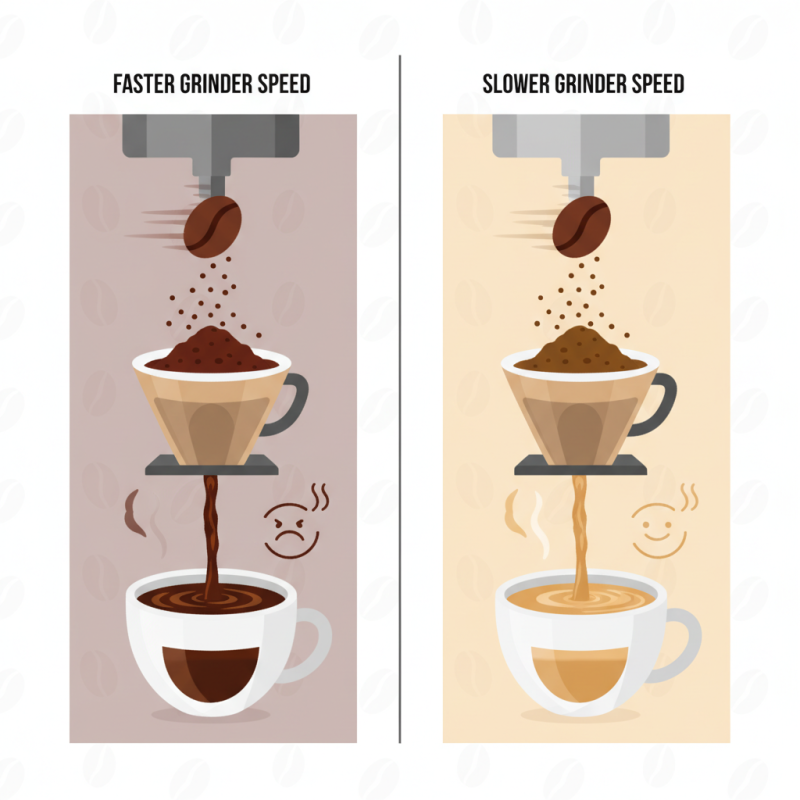
The art of brewing coffee is as intricate as it is rewarding. Many factors influence the final cup, but “How does grinder speed affect coffee quality” remains a crucial aspect. The grinder speed directly impacts grind size and consistency, which are vital for extraction. A faster speed produces finer particles, potentially leading to over-extraction. This can create bitter flavors that overshadow the beans’ natural sweetness.
Conversely, slower speeds often yield a more uniform grind. This consistency allows for balanced extraction, revealing the full spectrum of flavors. However, not all grinders maintain the same quality at varying speeds. Some may generate excess heat, affecting flavor negatively. Coffee enthusiasts must consider these variables when selecting equipment.
Understanding the relationship between grinder speed and coffee quality opens the door to better brewing practices. It invites reflection on personal preferences and brewing techniques. As you explore this topic, you may discover the nuances that elevate your daily coffee ritual. Each cup offers a chance to appreciate the intricate dance of physics and chemistry that defines exceptional coffee.
Understanding Grinder Speed and Its Role in Coffee Preparation
Grinder speed plays a significant role in coffee preparation. It influences the extraction process and ultimately impacts flavor. When grinders operate at high speeds, they can produce heat. This heat may alter the beans' properties, resulting in a bitterness that detracts from the coffee's taste. Balancing speed with quality is crucial.
For optimum flavor, a slower grind is often recommended. Slower speeds tend to maintain bean integrity. This method allows the essential oils to remain intact. However, it can require more effort and time, which some coffee enthusiasts may overlook. The finesse of flavor extraction lies in these subtleties, emphasizing the need for precision.
Experimentation is key in finding the right grind speed. Every coffee variety responds differently. Some may reveal their best characteristics at higher speeds, while others don’t. There isn’t one universal answer applicable to all situations. Making adjustments can lead to unexpected and delightful discoveries in flavor profiles. Engaging with this process can enhance your coffee experience.
The Relationship Between Grind Size and Extraction Rates
Grind size plays a pivotal role in coffee extraction. The right grind ensures optimal flavor and aroma. A coarse grind is better for methods like French press. It allows water to flow through quickly. This results in a lighter flavor profile. A fine grind, on the other hand, works best for espresso machines. It increases surface area, leading to quicker extraction and stronger flavors.
Pay attention to your grinding time. Over-grinding can produce bitter notes. Under-grinding may lead to sourness. Consistency is key. If your grind varies, so does your brew. Experiment with different settings until you find your ideal flavor balance.
Tips: Always use a burr grinder for uniformity. Adjusting your grinder for different brewing methods can drastically change your cup. If you're not satisfied, take notes. Experiment and refine your technique over time. Remember, each brewing method has its unique characteristics. Understanding grind size will deepen your coffee appreciation and enhance your brewing skills.
How Grinder Speed Affects Flavor Profiles in Coffee
The grinder speed plays a crucial role in determining the flavor profiles of coffee. A recent report from the Specialty Coffee Association indicates that grinding coffee beans at varying speeds can significantly enhance or diminish their aromatic compounds. Faster speeds tend to generate more heat, which can adversely affect flavor integrity. This heat can lead to the loss of volatile compounds, essential for a rich coffee flavor.
Research shows that optimal grinding occurs at moderate speeds. When grinders operate at around 1,200 RPM, they preserve flavor complexity, enhancing sweet and fruity notes in coffee. Conversely, speeds exceeding 2,000 RPM can result in a more bitter and less balanced cup. Many coffee enthusiasts might overlook the specific grind settings, leading to subpar tasting experiences. In fact, 27% of consumers may not even consider grinder speed when brewing their coffee.
Additionally, the uniformity of the grind size is crucial. Faster grinding can produce inconsistent particle sizes, resulting in uneven extraction during brewing. This inconsistency might manifest as a cup that lacks depth or body. Though the allure of quick grinding is tempting, the long-term impact on flavor profiles warrants careful consideration. Balancing speed with quality remains a challenge for many coffee lovers.
Adjusting Grinder Speed for Different Brewing Methods
The speed of your coffee grinder significantly influences the extraction process. Different brewing methods require distinct grind sizes. For example, espresso typically calls for a fine grind, while French press benefits from a coarse grind. Adjusting the grinder speed helps achieve these variations effectively.
Research indicates that a grinder operating at higher speeds generates more heat. This heat can negatively affect the beans, causing a loss of flavor compounds. A study published in the Journal of Food Science found that temperatures exceeding 60°C can alter the aroma and taste drastically. Discovering the right balance is crucial. Lower speeds can minimize heat, preserving the subtle notes in your brew.
Furthermore, the grind uniformity produced at varying speeds plays a pivotal role. Uneven grinds can lead to over-extraction or under-extraction during brewing. This inconsistency can result in a cup that lacks sweetness or has an overly bitter edge. Aim for a speed that produces a consistent grind size. Experimenting with different settings allows for optimal extraction tailored to your preferred method, enhancing overall coffee quality.
Balancing Grinder Speed and Brew Time for Optimal Results
Grinder speed plays a crucial role in the extraction of flavors from coffee beans. Studies show that an optimal grind size enhances flavor extraction and aroma while avoiding unpleasant bitterness. Balancing grinder speed with brew time is essential for achieving this. Research indicates that too fast a grind can lead to uneven extraction, resulting in lack of depth in the cup.
For instance, optimal brew time for a medium grind is generally between 25 to 30 seconds. If a grinder operates too quickly, it can reduce brew time, throwing off this balance. An analysis from the Specialty Coffee Association highlighted that slower grinding often yields a more uniform particle size. This uniformity can improve extraction rates and enhance the tasting experience.
However, not all coffee drinkers may notice these differences. Some might prefer the convenience of faster grinding despite potential drawbacks. It's essential to experiment and find the right speed that complements your brewing method and personal taste. Identifying the perfect combination of grinder speed and brew time may require trial and error, but it’s a journey towards a better cup of coffee.
FAQS
: Grind size affects flavor and aroma. Coarse grinds allow quicker water flow, resulting in lighter flavors.
Over-grinding can lead to bitter notes in your coffee. It's important to monitor your grinding time carefully.
A fine grind increases surface area, enabling faster extraction and producing stronger coffee flavors.
A burr grinder ensures uniformity in grind size. This consistency improves the overall brewing process and flavor.
Higher grinder speeds generate heat, which can harm flavor compounds. It's better to grind at lower speeds.
Optimal brew time varies with grind size. A medium grind typically takes 25 to 30 seconds for best results.
Uneven grinds can lead to over-extraction or under-extraction, affecting the taste and quality of your coffee.
Yes, experimenting is crucial. It helps you find the right balance of grind size, speed, and brew time for your taste.
Not everyone may notice the impact of grind size. Some prefer quicker grinding, even if it has drawbacks.
Take notes while experimenting and adjust your methods. This will help you develop a better appreciation for coffee.
Conclusion
In the exploration of "How Does Grinder Speed Impact Your Coffee Quality?", it's essential to understand the critical role that grinder speed plays in the coffee preparation process. The speed at which beans are ground influences not only the grind size but also the extraction rates during brewing. A finer grind may require different extraction times compared to a coarser one, directly affecting the flavor profiles of the coffee.
Moreover, adjusting grinder speed based on various brewing methods can lead to optimized results, balancing the relationship between grind size, brew time, and overall taste. Ultimately, understanding how grinder speed affects coffee quality can help enthusiasts achieve a more refined and enjoyable coffee experience, catering to their personal preferences and brewing techniques.

 Sophia Electric Appliance