When considering the question, "What is the difference between commercial and home coffee machines," the distinction becomes crucial for coffee enthusiasts and businesses alike. In 2022, the global coffee machine market was valued at $4.2 billion, with commercial machines seeing a significant rise in demand. This growth reflects the evolving landscape of coffee consumption. According to expert Andrew McKee, a renowned barista and equipment specialist, "The choice between home and commercial machines boils down to usage and precision."
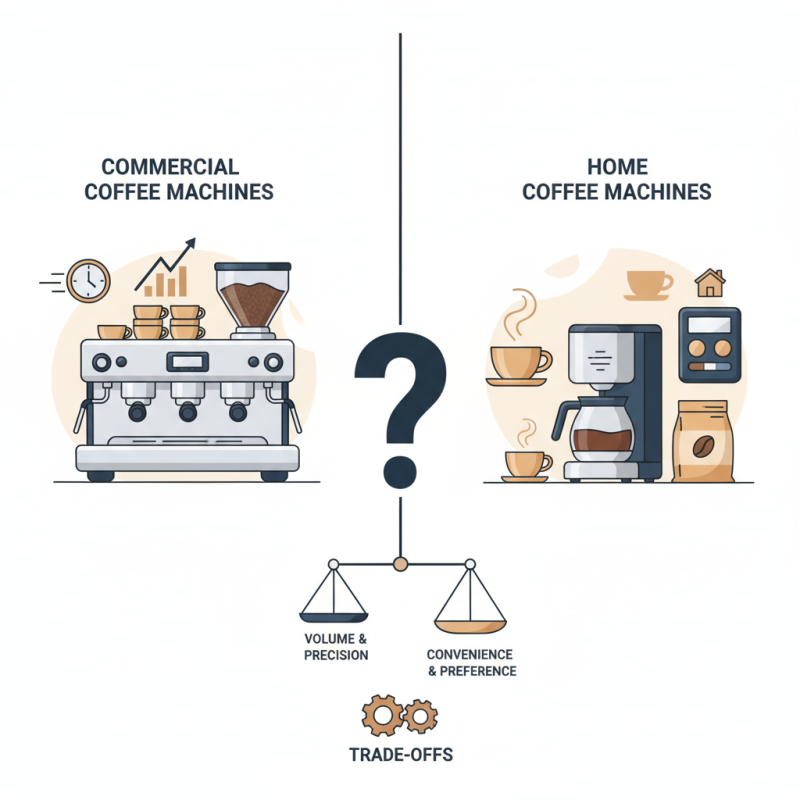
Commercial machines are designed for high-volume production. They can brew multiple cups in a short time, serving busy cafes efficiently. In contrast, home machines focus on user-friendly designs and individual preferences. They often lack the advanced features necessary for scalability. The finer details, such as temperature stability and pressure control, are what truly separate these two categories.
Every decision has trade-offs. Home machines emphasize convenience, but may fall short in delivering café-style quality. Conversely, while commercial machines deliver consistency, they can overwhelm casual users. Understanding these nuances is essential for making an informed choice that suits your coffee needs.
Commercial Coffee Machines: Key Features and Specifications
Commercial coffee machines are designed for high-volume operations, making them essential for cafes and restaurants. These machines often feature dual or triple groups, allowing multiple espresso shots to be extracted simultaneously. This capability is crucial during peak hours when customer demand is high. According to a report by the Specialty Coffee Association, commercial machines can produce thousands of cups daily, showing their efficiency.
Durability is another key specification. Commercial machines are built with robust materials to withstand constant use. Stainless steel exteriors and heavy-duty components ensure longevity. A study from the National Coffee Association found that nearly 60% of cafes prioritize machine reliability. Maintenance guides usually emphasize regular cleaning to optimize performance.
Moreover, features like programmable settings and advanced boilers enhance user experience. Many machines also have steam wands for creating textured milk, vital for specialty beverages. Despite these advantages, choosing a commercial machine requires careful consideration of your business's needs. Not every feature may be relevant. Reflecting on budget constraints and space is crucial when selecting the right equipment.
Home Coffee Machines: Convenience and Versatility Explored
Home coffee machines have transformed the way many people enjoy their daily brew. For an average coffee drinker, convenience and versatility are key. A recent survey indicated that 75% of coffee enthusiasts prefer brewing at home to save time and money. This shift reflects a growing trend in home brewing technology, making it easier for users to experiment with various coffee styles.
The versatility of home machines is noteworthy. Many models allow for a range of brewing methods, from espresso to drip coffee. This flexibility enables users to tailor their experience. A report from the Specialty Coffee Association highlighted that user engagement and satisfaction increased by 40% when consumers adopted machines with programmable features. Yet, these machines come with complexities. Some users struggle with the learning curve. They often find themselves questioning if they are using the right settings for optimal flavor.
Price is another factor to consider. While home coffee machines can be cost-effective, high-end models require a significant initial investment. Data shows that the average American spends over $1,000 annually on coffee shop purchases. Many believe investing in a quality home machine could yield long-term savings. However, it’s essential to weigh these potential savings against the maintenance and the occasional disappointment of a less-than-perfect cup. This reflection can help individuals make more informed decisions about their coffee experiences.
Cost Analysis: Comparing Investment in Commercial vs Home Machines
When evaluating the cost of coffee machines, it's crucial to weigh commercial versus home options. Commercial coffee machines can carry hefty price tags, often ranging from $5,000 to over $20,000. They are built for high volume and durability, making them suitable for coffee shops or restaurants. In contrast, a quality home machine typically costs between $100 and $600. While the initial investment is lower, these machines may not withstand heavy daily use.
Operating costs also differ significantly. Commercial setups generally require more skilled labor for operation. This could lead to higher wages for baristas. However, a well-trained staff can produce high-quality coffee, justifying the operational costs. Home machines, on the other hand, have lower operational costs. They require minimal maintenance and no staff, yet they may lack the consistent quality of commercial machines.
Experts suggest that, over time, the total cost of ownership can vary widely based on usage. For instance, a coffee shop may find its commercial machine pays for itself in a year or two due to volume sales. In contrast, a dedicated home user might find it more economical to invest in a quality machine for personal enjoyment. Careful reflection on one’s needs and budgets is essential before making a decision on investment in coffee machines.
Commercial vs Home Coffee Machines - Cost Analysis: Comparing Investment in Commercial vs Home Machines
| Feature |
Commercial Coffee Machines |
Home Coffee Machines |
| Initial Cost |
$5,000 - $30,000 |
$50 - $2,500 |
| Maintenance Cost (Annual) |
$500 - $2,000 |
$50 - $150 |
| Coffee Output (cups/hour) |
150 - 500 |
2 - 10 |
| Durability (Years) |
5 - 15 |
3 - 10 |
| Customization Options |
High |
Medium |
| Space Requirements |
Large |
Small |
Brewing Quality: Taste Tests and Consumer Preferences in Coffee
When it comes to brewing quality coffee, consumer preferences reveal interesting insights. A survey by the Specialty Coffee Association found that 64% of coffee drinkers prioritize taste over all other factors. Taste tests often highlight the rich flavors that professional machines can extract. However, many home setups can achieve impressive results too. In fact, 45% of home brewers believe they create coffee comparable to café quality.
The brewing method significantly influences the final taste. Data shows that espresso machines can produce a smoother, richer flavor profile. In contrast, drip coffee makers, while convenient, often lack the same depth. A study indicated that 58% of consumers chose espresso for its intense flavor. Nonetheless, inconsistency remains a challenge for both home and commercial machines. Many users report variability in taste, which can stem from grind size, water quality, and machine maintenance.
One interesting trend is the rise of manual brewing methods. While traditional machines dominate, around 32% of coffee enthusiasts prefer brewing by hand, appreciating the art and control it offers. Despite the growing popularity, it’s essential to acknowledge that not everyone achieves the same results. Inaccurate measurements or poor technique can lead to disappointing brews. This highlights the ongoing learning curve in coffee preparation, regardless of the equipment used.
Maintenance and Longevity: Evaluating Durability in Different Settings
When evaluating the durability of commercial versus home coffee machines, maintenance plays a crucial role. Commercial machines are often built for high-volume environments. They are designed to withstand constant use and require more robust materials. A study from the Specialty Coffee Association indicates that these machines often last over a decade with proper care. However, maintenance is essential. Regular descaling and cleaning can prevent long-term damage. Neglecting these tasks can lead to expensive repairs.
Home machines, on the other hand, vary significantly. While some models boast impressive longevity, many are not designed for daily heavy use. Research suggests that typical home machines last between three to five years. In this context, users may overlook regular maintenance due to convenience. This lack of attention can substantially diminish the machine's lifespan. Home users may struggle to perform complex maintenance tasks, leading to decreased reliability.
Ultimately, the choice hinges on usage patterns. If you make coffee sporadically, a home machine could suffice. For coffee enthusiasts or small businesses, investing in a commercial machine can be wise. The durability of these machines reflects the environment they are designed for. Careful consideration and commitment to maintenance greatly influence their longevity. Understanding the demands placed on these machines can inform better purchasing decisions.
Conclusion
When considering coffee machines, one might wonder, "What is the difference between commercial and home coffee machines?" Commercial coffee machines are designed for high-volume production, featuring robust components and sophisticated technology to ensure quick brewing and consistent quality. They offer advanced specifications tailored for busy environments, but come with a higher price tag and maintenance demands.
In contrast, home coffee machines prioritize convenience and versatility, offering a range of features that cater to personal preferences without overwhelming the user. While they may not reach the same brewing quality or durability as commercial options, they serve well for everyday use at a more accessible cost. Ultimately, the decision between these two types hinges on individual needs: whether one prioritizes high efficiency and superior taste typical of commercial machines or the flexibility and affordability of home models.

 Sophia Electric Appliance