Choosing an office coffee machine from China is not just a price comparison. It is a decision about daily routines, reliable supply, and the small details that keep a shared kitchen running. How to choose a coffee machine for office use depends on how many cups your team drinks, when demand peaks, and who will clean the machine. A compact model may suit a studio with ten colleagues. A busy office may need a larger bean-to-cup machine, a clear waste-bin indicator, and a water tank that is easy to refill.
Coffee writer and equipment reviewer James Hoffmann is widely associated with the advice, “The best coffee is the coffee you like, the way you like to drink it.” That principle matters at work, too. A machine that makes excellent espresso may frustrate a team that mostly wants quick black coffee or milk drinks. Match the brewing options to real habits, not a product photo. Small detail. Big difference.
When comparing Chinese suppliers, look beyond the machine’s advertised features. Ask for clear specifications, warranty terms, spare-part availability, and practical cleaning instructions. Request a sample or live demonstration when possible. Check how the supplier tests each unit and handles service questions across your region. The lowest quote can hide costly delays, and an impressive brochure proves little. A minor caution: supplier claims still need checking. This guide will help you weigh capacity, drink options, maintenance, quality controls, and long-term costs before choosing a model that fits your office rather than merely filling a corner.
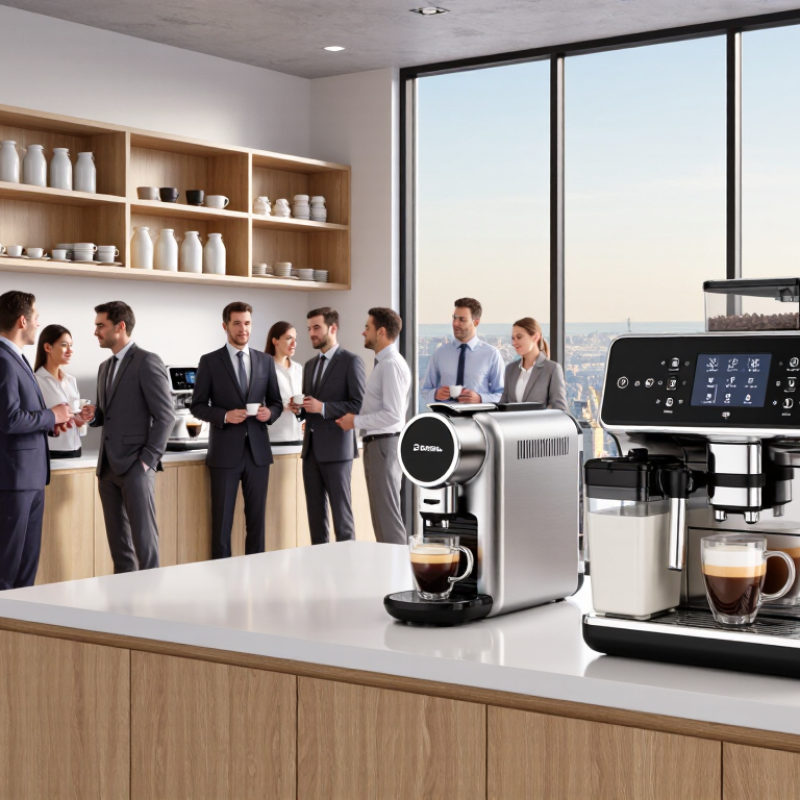
Choosing an office coffee machine from China starts with the people who will use it. Count regular drinkers, shifts, and visitors, then estimate demand during the busiest 30 minutes. The National Coffee Association’s 2024 National Coffee Data Trends report found that 67% of U.S. adults drank coffee the previous day. This is useful context, not a forecast for a Chinese workplace. Survey your own team; habits vary. A daily total can hide a sharp morning rush.
Measure the counter before comparing machine capacity. Note nearby power outlets, water access, drainage, and room for cups and supplies. Leave space for the lid to open and staff to refill beans or clean the brewer. In a compact pantry, a tall machine may block an upper cabinet. In an open office, grinding noise can interrupt nearby calls. The estimate will be imperfect. Recheck it after a trial period.
Tips: For two weeks, record cups served at 9 a.m., noon, and 3 p.m. Include tea drinkers and occasional guests. Compare those peaks with the machine’s stated output, not just its tank size. Ask the supplier for installation dimensions, cleaning steps, and service response times in writing.
How to Choose the Best Office Coffee Machine from China?
Compare machine types against your team’s routine. Bean-to-cup machines grind and brew each serving, offering variety with more cleaning. Batch-drip machines suit teams that drink the same coffee and need several cups ready at once. Capsule systems are simple to operate, but create more single-use waste. For a 30-person office, 30–60 cups daily is a useful planning range if you assume one or two drinks per person. Check the machine’s rated output and peak-hour speed, not just its advertised daily capacity.
Brewing method changes both flavor and workflow. Espresso-based drinks need a grinder, milk handling, and regular maintenance; filter coffee is easier to serve in volume. The Specialty Coffee Association’s brewing guidance places ideal water temperature around 92–96°C. Use it as a starting point, then test the actual beans and water. The National Coffee Association’s 2024 National Coffee Data Trends report found that 67% of U.S. adults had coffee the previous day. That signals strong overall demand, but it is not an office-specific forecast. Capacity estimates remain a little messy.
Tips: Ask Chinese suppliers for a live brewing test, cleaning instructions, spare-part lead times, and documented capacity under continuous use. Test during your busiest break, not just with one cup.
How to Choose the Best Office Coffee Machine from China?
A reliable purchase starts with checking the supplier, not just comparing prices. Ask whether the factory makes the machine or sources it from another producer. Request its business registration details, production photos, and a live video walkthrough of the assembly area. Ask for proof.
Review certificates and test reports carefully. Check that the documents name the exact model you plan to buy, and confirm their issuing body and validity. Requirements vary by destination, so verify which approvals apply to your market before placing an order. A certificate for a similar-looking model may not cover your machine.
Product specifications should fit your office routine. Compare daily brewing capacity, voltage and frequency, water connection, grinder settings, cleaning steps, and noise levels. Ask for the user manual, spare-parts list, warranty terms, and written service response times. Then test a sample: measure how long it takes to brew several cups and inspect the coffee temperature and taste. There is no perfect checklist; a sample can still differ from a production run. Put agreed specifications and inspection criteria in the purchase contract, and confirm them again before shipment.
| Decision Area | What to Compare | Practical Guidance | What to Request or Verify |
|---|---|---|---|
| Office size and demand | Expected cups per day, peak-time demand, and number of users | Estimate normal and peak usage before choosing a machine. A machine’s stated capacity is not necessarily the same as its recommended daily workload. | Ask for the manufacturer’s recommended daily output and any limits on consecutive brewing or recovery time. |
| Machine type | Drip/filter, capsule, or bean-to-cup | Drip/filter machines suit batch brewing; capsule machines offer portion control and simple operation; bean-to-cup machines grind beans and prepare drinks on demand but usually require more cleaning. | Confirm which drinks the machine makes, whether milk is handled automatically, and what consumables or accessories are required. |
| Brewing capacity | Water tank or direct-water connection, brew volume, and serving size | Choose a tank size and brewing format that match the office routine. A direct-water connection can reduce refilling but requires suitable plumbing and installation. | Request the tank capacity, supported cup sizes, water-connection requirements, and instructions for water filtration if applicable. |
| Electrical compatibility | Rated voltage, frequency, power, plug, and local electrical requirements | Electrical ratings and plug types vary by destination. Do not assume a machine made for one market can be connected safely in another. | Check the rating plate and datasheet against the destination country’s supply and plug requirements. Confirm the exact configuration supplied. |
| Dimensions and installation | Machine footprint, height, ventilation clearance, and access for maintenance | Measure the counter and the route to the installation area. Allow room to open lids, remove trays, refill ingredients, and clean the machine. | Request dimensioned drawings, machine weight, clearance guidance, and installation instructions. |
| Cleaning and maintenance | Daily cleaning steps, descaling, removable parts, and service access | Milk systems and bean-to-cup mechanisms may need regular cleaning. Check that routine tasks are manageable for the office staff. | Request the cleaning schedule, user manual, descaling instructions, and availability of replacement filters, seals, and other wear parts. |
| Supplier verification | Factory or trading-company role, production capability, and export experience | Verify who will manufacture the machine and who will handle export, quality control, and after-sales support. Evaluate evidence rather than relying only on a listing or sales claim. | Request the registered business details, facility information, product references, quality-control process, and a live video or independent audit where appropriate. |
| Certifications and compliance | Requirements for the destination market and the exact model | Requirements depend on the product configuration and import destination. For example, CE marking is relevant to products covered by applicable EU legislation; electrical safety and electromagnetic compatibility requirements should also be checked. RoHS may apply to restricted substances in electrical and electronic equipment. | Ask for current test reports and declarations that identify the exact model and applicable standards. Verify documents with the issuing body or testing laboratory. Do not treat a certificate for a different model as proof of compliance. |
| Materials and food-contact parts | Water path, boiler, tubing, seals, and any parts that contact coffee or milk | Food-contact rules vary by destination and material. A general statement such as “food grade” is not a substitute for supporting documentation. | Request material specifications and relevant food-contact compliance documents for the destination market, where required. |
| Sample and quality inspection | Sample performance, workmanship, packaging, and production consistency | Test a representative sample before placing a production order. Define measurable acceptance criteria and inspect the goods before shipment. | Agree on a sample approval process, inspection checklist, defect limits, and independent pre-shipment inspection arrangements. |
| Warranty and spare parts | Warranty period, covered components, exclusions, and response process | Compare the written warranty and practical service arrangements, not just the advertised warranty length. Importing spare parts can affect repair time and total cost. | Obtain the warranty terms, spare-parts list, parts pricing, service contact details, and expected support response times in writing. |
| Shipping and landed cost | Packaging, shipping method, lead time, duties, taxes, and delivery terms | Compare the full landed cost rather than the unit price alone. Confirm who is responsible for freight, insurance, customs clearance, and local delivery under the agreed Incoterm. | Request a dated quotation that states model, quantity, packaging, lead time, Incoterm, payment terms, and any excluded charges. |
When choosing an office coffee machine from China, compare its total cost over several years, not just the quoted price. Include freight, import fees, installation, filters, cleaning supplies, and expected repairs. ENERGY STAR’s commercial coffee brewer guidance reports that certified models can use about 30% less energy than standard models. Ask the supplier for measured power use in standby and brewing modes; a glossy specification sheet may not match a busy pantry. Small detail, real impact.
Warranty terms need to be specific. Check which parts are covered, who pays return shipping, and whether local technicians can diagnose faults. Ask for response times in writing and keep spare-part lead times on record. A machine that sits idle for ten days can cost more than a cheaper unit. NAMA’s 2023 State of the Industry report estimated U.S. convenience-services revenue at $26.6 billion in 2022, showing how much the sector depends on reliable equipment and service. That figure is broad, not a warranty benchmark. Request a sample service log, video troubleshooting steps, and a parts list before paying. I would still verify the promised support with a real customer reference; written terms can look better than the experience.
Before ordering a shortlisted office coffee machine from China, test a sample during a real workday. The National Coffee Association’s 2024 National Coffee Data Trends report found that 67% of U.S. adults had coffee the previous day. That signals strong demand, but not the right capacity for every office. Track cups per hour, brew time, refill frequency, and noise during busy periods. Try the actual beans, water, and cup sizes your team will use. A machine that performs well in a showroom may struggle beside a crowded sink.
Check workplace fit closely. Measure counter depth, clearance above the unit, and access to a nearby outlet and water supply. Ask staff to clean the drip tray and refill beans; note whether these tasks feel simple after several cycles. Confirm voltage, plug type, filter availability, spare-part lead times, and service arrangements with the supplier before shipment. These details can be easy to overlook. Our shortlist may still be imperfect: a quiet machine can brew too slowly at 8:30 a.m.
Tips: Run a timed test with your expected peak queue. Record drinks per ten minutes, cleaning time, and any error messages. Ask several employees to rate taste and ease of use, not just the office manager. Keep the test notes, including small annoyances. They often predict daily complaints better than a polished product sheet.
A useful starting range is 30–60 cups daily, assuming one or two drinks per person. Track actual use; the estimate can be messy.
Bean-to-cup machines grind each serving and offer variety, but need more cleaning. Batch-drip machines prepare several cups at once. Capsule systems are simple, though they create more single-use waste.
Filter coffee is generally easier to serve in volume. Espresso drinks need a grinder, milk handling, and regular maintenance. Test the workflow your team will actually use.
Around 92–96°C is a useful starting range. Try your actual beans and water, since results may vary.
Ask for rated output and test during the busiest break. Record cups per ten minutes, brew time, refill frequency, and error messages. One showroom cup proves little.
Add freight, import fees, installation, filters, cleaning supplies, energy, and likely repairs. Ask for measured power use during brewing and standby.
Check covered parts, return-shipping costs, written response times, local diagnosis options, and spare-part lead times. Request a parts list and sample service log. Promises can look better on paper.
Measure counter depth and overhead clearance. Check the outlet, water supply, voltage, plug type, and filter availability. Have staff refill beans and clean the drip tray several times.
Use the office’s beans, water, and cup sizes. Ask several employees to rate taste, noise, and ease of cleaning. Keep notes on small annoyances; they may matter daily.
Choosing the right office coffee machine starts with understanding how many people will use it, how often they drink coffee, what beverages they prefer, and how much counter space is available. How to choose a coffee machine for office use depends on matching these everyday needs with the machine’s brewing method, ease of operation, maintenance requirements, and capacity. Comparing different machine types can help you find an option that keeps up with busy periods without taking up more space than the workplace can spare.
When sourcing from China, review suppliers’ credentials, product specifications, and relevant certifications, then compare the full cost of ownership rather than focusing only on the purchase price. Consider warranty coverage, replacement parts, cleaning needs, and the availability of after-sales support. Before making a final decision, test shortlisted machines where possible to assess coffee quality, noise, speed, and ease of use. Confirm that the machine fits your workplace setup and that employees can operate and maintain it comfortably.

Sophia Electric Appliance