China Top Coffee Grinder How to Adjust Grind Settings?

Time:2026-10-28 Author:Madeline
0%

Choosing a reliable China coffee grinder is only part of making better coffee. Grind adjustment determines how water moves through the grounds. A small change can alter sweetness, strength, body, and bitterness. Leading Chinese grinder models may use stepped or stepless systems, so their adjustment methods can differ. Always check the manufacturer’s manual before changing internal components.

This guide explains How to adjust grind settings for different drinks with practical, repeatable methods. Espresso usually needs a fine grind and careful dial-in. Pour-over often requires a medium grind for balanced flow. French press commonly uses a coarse setting to reduce sediment. Start with the recommended range, then adjust one step at a time. Keep the dose and water amount consistent. Use a scale if possible.

Watch the coffee, not only the numbered dial. A slow espresso stream may indicate grounds that are too fine. A watery pour-over can suggest a setting that is too coarse. These signs are useful, but they are not perfect. Bean freshness, roast level, humidity, and burr alignment also influence results. I have sometimes changed the grind too quickly and confused the real cause. That mistake is easy to repeat. Record each setting, taste carefully, and allow the grinder to settle after adjustment. A clear process produces more dependable results, even when the first cup disappoints.
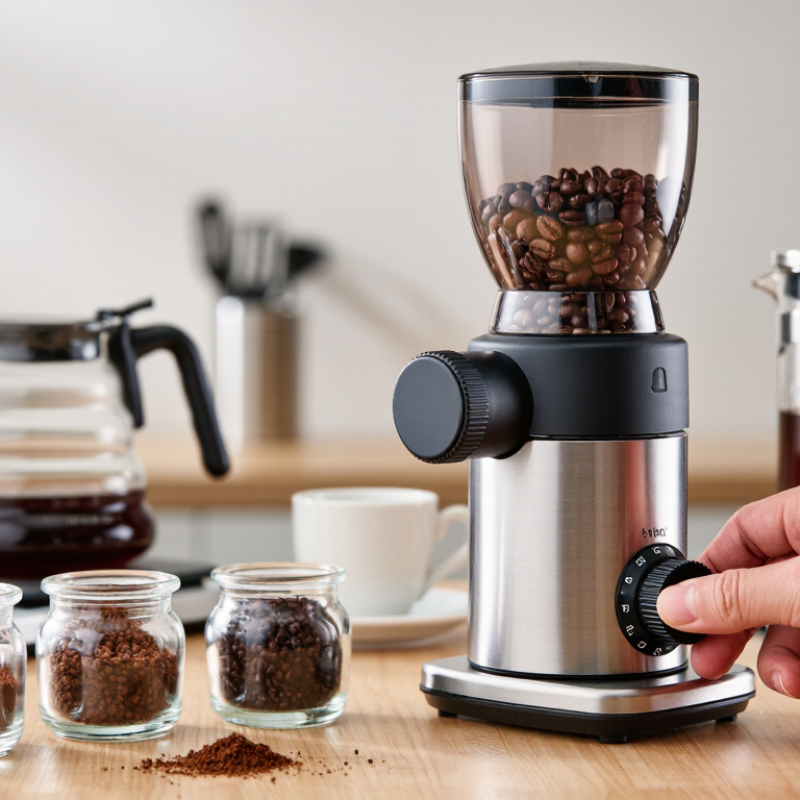
China Top Coffee Grinder How to Adjust Grind Settings?

Define Brew Targets: SCA’s 18–22% Extraction Yield and 1.15–1.35% TDS

When adjusting a coffee grinder, begin with measurable brew targets. The SCA Brewing Control Chart places balanced extraction near 18–22%, with a typical TDS range of 1.15–1.35%. These figures are useful, not absolute laws. They connect grinder particle size with strength and soluble material.

Use a refractometer after brewing. Record dose, beverage weight, water temperature, brew time, TDS, and extraction yield. For example, a 20-gram dose producing 300 grams of coffee at 1.25% TDS gives about 18.75% extraction. If the result tastes thin and measures below 18%, move finer in small steps. If it tastes harsh and exceeds 22%, move coarser. Change only one variable each test.

Keep the grinder adjustment practical. A finer setting usually slows flow and increases extraction. A coarser setting often does the opposite. However, uneven particles can confuse the result. The SCA Brewing Handbook stresses repeatable brewing conditions, yet real coffee rarely behaves perfectly. I sometimes chase a number and lose sweetness. That is a warning. Taste the cup beside the measurement, especially when TDS sits inside the 1.15–1.35% range. A clean 19% extraction may outperform a flat 21%. Small clicks matter. So does fresh calibration.

Match Particle Size: 200–400 μm Espresso, 400–800 μm Filter, 800–1,200 μm Press

China Top Coffee Grinder: How to Adjust Grind Settings?

Particle size should guide every adjustment. For espresso, aim for 200–400 μm. This fine range creates resistance during short extraction. For filter coffee, use 400–800 μm. Water moves more freely through the bed. Press brewing usually needs 800–1,200 μm particles. The larger pieces help reduce muddy sediment. These ranges are practical targets, not laboratory laws. Coffee origin, roast level, and burr alignment can shift the result.

The Specialty Coffee Association’s brewing standards commonly reference 55 g of coffee per liter, 1.15–1.35% beverage strength, and an 18–22% extraction yield. Use these figures as control points. Keep the dose and water temperature stable while changing only the grinder. If espresso tastes sharp and finishes too quickly, grind finer. If it tastes dry or drips slowly, grind coarser. One small click can matter. I would not trust the grinder dial alone. Burr wear and retention can create unexpected particles.

Tips: Weigh the dose before and after grinding. Purge a small amount when changing settings. Brew three cups before judging the change. A kitchen sieve can reveal oversize particles, although it cannot replace professional testing. My own adjustment rule is deliberately imperfect: change one variable, record the taste, then question the record. Humidity often ruins neat assumptions.

How to Adjust Coffee Grinder Settings by Particle Size

Select a grind setting that produces particles within the target range for your brewing method. Espresso requires the finest particles, filter coffee uses a medium range, and French press uses a coarse range. Actual results may vary with the grinder, coffee bean, and brewing recipe.

Calibrate a China-Made Grinder: Align the Zero Point and Burr Clearance

China Top Coffee Grinder: How to Adjust Grind Settings?

Calibrating a China-made grinder starts with the zero point. Unplug the grinder first. Remove retained grounds and brush the burr chamber carefully. Turn the adjustment dial toward fine until the burrs barely touch. Do not force the dial. This contact position is the mechanical zero, not always the printed zero. Mark it with a removable pencil line.

Now create a small burr clearance. Turn the dial coarser by two or three scale marks. The exact distance varies between grinders, so printed numbers cannot replace testing. The Specialty Coffee Association identifies grind size and particle distribution as essential brewing variables. A burr that sits unevenly can produce both dusty fines and large fragments. Small movements matter.

Dose a fixed amount and record the setting, time, and output. For espresso, change only one variable after each shot. Listen for scraping. Stop immediately if the burrs bind.

The National Coffee Association’s 2024 report found that 67% of American adults drank coffee the previous day, showing how widely routine brewing matters. The International Coffee Organization reported global coffee consumption near 177 million 60-kilogram bags in 2023/24, increasing pressure for consistent preparation. I still recheck zero after cleaning. Heat, vibration, and manufacturing tolerance can shift the reference. That is inconvenient, but honest calibration beats trusting a dial.

Dial In Espresso: Adjust Grind for 9-Bar Pressure and 25–30-Second Shots

China Top Coffee Grinder: How to Adjust Grind Settings?

Dialing in espresso means balancing grind size, dose, distribution, and pressure. Aim for about 9-bar pressure and a 25–30-second shot. Begin with a measured dose that suits your basket. Keep the dose unchanged while testing grind size. This makes each result easier to judge.

If the shot runs in 18 seconds, the grind is probably too coarse. Adjust one small step finer, then test again. If the shot takes 40 seconds, move slightly coarser. Purge a small amount after adjustment, because old grounds can remain between the burrs. Record the dose, yield, time, and taste beside each test.

Taste matters as much as numbers. A fast shot may taste sharp and thin. A slow shot can taste bitter or heavy. Watch the pressure gauge, but do not chase exactly 9 bar blindly. Uneven distribution may cause pressure changes and weak areas in the coffee bed. Level the grounds carefully and tamp with steady pressure.

Keep the grinder clean and check the burr setting regularly. Heat, humidity, and bean age can change the ideal adjustment. My first attempts often focused too much on shot time. That was a mistake. A 27-second shot can still taste unbalanced. Use small changes, careful notes, and honest tasting. Some adjustments will fail. That is useful evidence, not wasted coffee.

Confirm Consistency: Track Dose, Retention, Distribution, and Taste Results

When adjusting a coffee grinder, do not judge the setting by flavor alone. Record the dose, ground coffee output, retention, distribution, and final taste. The National Coffee Association’s 2024 Spring Trends report found that 67% of American adults drank coffee the previous day. More daily brewing means small inconsistencies matter. A 20-gram dose should produce nearly 20 grams out. Weigh the hopper before and after grinding. Purge and measure retained coffee. Retention can quietly change tomorrow’s first shot.

Use one adjustment at a time. Keep the coffee dose fixed, then change grind size by a small increment. Watch the flow, surface texture, and extraction time. Distribution should look even, without dry pockets or a dense mound at one edge.

The Specialty Coffee Association identifies grind size, dose, distribution, and extraction as key brewing controls. Taste remains the final judge. Sharp acidity may signal under-extraction, while harsh bitterness can suggest over-extraction. Yet these signals overlap. I sometimes blame the grinder too quickly.

Repeat each test several times. The International Coffee Organization estimated global coffee consumption at about 177.9 million 60-kilogram bags in 2023/24, showing how widely these variables affect daily preparation. Keep a simple log: setting, dose, output, retention, time, and flavor. A 0.3-gram difference can be meaningful in espresso. Do not chase perfect numbers. Your notes may reveal that distribution, not grind size, caused the uneven cup. Evidence beats memory.

FAQS

How do I find the grinder’s true zero point?

Unplug the grinder and remove retained grounds. Turn the dial finer until the burrs barely touch.

Is the printed zero always accurate?

No. The mechanical zero may differ from the printed scale. Manufacturing tolerances can shift the reference.

How much burr clearance should I use after finding zero?

Turn the dial coarser by two or three scale marks. Test the result with coffee.

What should I do if the burrs scrape or bind?

Stop immediately and turn the dial slightly coarser. Never force a tight adjustment.

How can I check grinding consistency?

Weigh a fixed dose before grinding. Weigh the output afterward and record the difference.

Why should I measure retained coffee?

Retained grounds can change the next dose. Purge the grinder, then measure the coffee released.

Which variables should I change during testing?

Keep the dose fixed and change only grind size. Record the setting, time, output, and taste.

How do I recognize uneven coffee distribution?

Look for dry pockets or a dense mound on one side. Spread the grounds evenly before brewing.

Can taste alone identify the correct grind setting?

No. Sharp acidity may suggest under-extraction, while harsh bitterness may suggest over-extraction.

How often should I recheck calibration?

Recheck after cleaning, heavy vibration, or noticeable heat changes. Repeat several tests instead of trusting one result.

Conclusion

Adjusting a coffee grinder begins with defining a clear brewing target. Aim for an extraction yield of approximately 18–22% and a TDS of 1.15–1.35%, then select a particle range suited to the drink: about 200–400 μm for espresso, 400–800 μm for filter coffee, and 800–1,200 μm for press brewing. The guide explains How to adjust grind settings for different drinks by connecting particle size with contact time, flow rate, and flavor balance.

Before dialing in a China-made grinder, align the burrs, identify the true zero point, and confirm safe burr clearance. For espresso, adjust the grind to support roughly 9-bar pressure and a 25–30-second shot time. Finally, evaluate consistency by recording the dose, retention, distribution, and taste results. Small, controlled adjustments make it easier to correct sourness, bitterness, weak body, or slow flow while maintaining repeatable performance.

Madeline

Madeline

Madeline is a dedicated marketing professional with a wealth of expertise in our company's core offerings. With a keen understanding of the industry, she brings a unique perspective to her role, consistently delivering high-quality content that highlights the superior aspects of our products. As......