When it comes to choosing the right coffee grinder, many ask, "Why is a burr grinder better than other grinders?" Renowned barista expert James Hoffmann emphasizes, "A burr grinder provides consistency that blade grinders simply can’t match." This statement shines a light on the foundational advantages of burr grinders.
Burr grinders crush beans in a uniform manner. This consistency not only enhances flavor but also ensures an even extraction during brewing. When beans are ground unevenly, some coffee can taste bitter, while others may be weak. No one wants to sip a cup that disappoints.
Moreover, burr grinders allow for precise control over grind size. This is crucial for different brewing methods. For instance, a coarser grind works well for French press, while a fine grind suits espresso. It may seem intricate, but investing time in understanding your grinder can dramatically improve your coffee experience. It's a small change that can lead to a better morning routine.
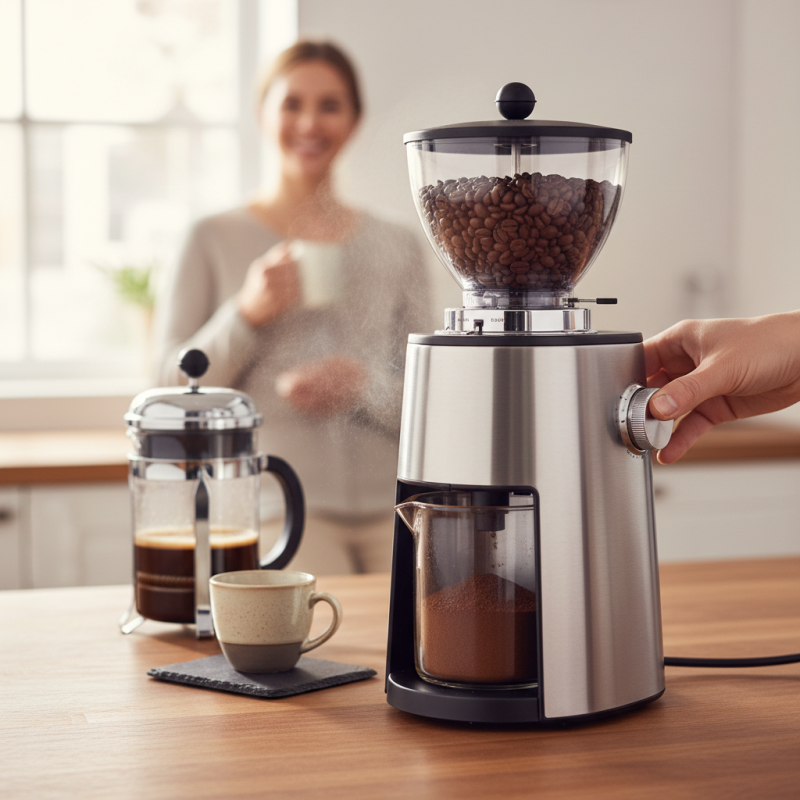
When it comes to coffee preparation, choosing the right grinder makes a significant difference. Burr grinders stand out by offering a consistent grind size. This uniformity is essential for brewing methods like espresso and pour-over, where even extraction is crucial. Each coffee bean is ground to the same size, ensuring optimal flavor release. In contrast, blade grinders often produce uneven particles, leading to over or under-extraction. This inconsistency can result in a bitter or weak cup of coffee, leaving drinkers unsatisfied.
Another advantage of burr grinders is their ability to retain the coffee's essential oils. These grinders gently crush beans rather than chop them, minimizing heat that can degrade flavor. When using a blade grinder, heat builds up quickly, which can scorch the coffee, resulting in a loss of aroma and taste.
The control offered by a burr grinder allows coffee enthusiasts to explore different grind settings. This versatility can elevate the coffee experience significantly. Many users have noticed the difference in taste when switching from blade to burr grinders. While the initial cost may be higher, the benefits often outweigh the price.
Owning a burr grinder can lead to a more enjoyable and flavorful cup of coffee. It may take time to master the settings for personal preference, but the results can be rewarding. If you value quality in your coffee, exploring burr grinding is a worthwhile step.
Burr grinders are renowned for producing a consistent grind size, and that consistency is key for optimal flavor extraction. Unlike blade grinders that can create uneven particles, burr grinders crush beans between two burrs, allowing for uniformity. This uniform grind allows hot water to extract flavors evenly during brewing. When particles are the same size, water flows through them more consistently. The result? A balanced cup of coffee with rich complexity.
In the world of coffee, precision is essential. Each brewing method has an ideal grind size, and burr grinders can adapt. For espresso, a fine grind is crucial, while French press requires a coarser texture. Espresso brewed with uneven particles can yield a harsh taste. Similarly, a coarse grind that's too fine can create an overly bitter brew in French press. With burr grinders, achieving the perfect size is more achievable.
Still, there are nuances to consider. Some users might overlook the importance of maintaining their grinder. A dirty burr grinder won’t perform optimally, affecting flavor. Regular cleaning and calibration ensure that your grinder continues to provide the desired results. Investing time in care can significantly enhance your coffee experience.
A burr grinder stands out due to its ability to create grind size uniformity. This feature significantly impacts brewing methods and extraction rates. When coffee grounds are uniform in size, water can extract flavors evenly. This leads to a balanced cup, rich in taste and aroma. In contrast, other grinders often create inconsistent particle sizes, which can result in over-extraction or under-extraction.
For instance, when brewing with a French press, uneven grinds may lead to bitter flavors. Larger particles can escape extraction, leaving the brew weak. However, with a burr grinder, each particle is consistent, ensuring optimal extraction. Pour-over methods also benefit from this uniformity. A steady flow of water interacts better with uniformly sized grounds, enhancing flavor profiles.
Many enthusiasts overlook these details, focusing instead on convenience. Yet, a reliable grind can transform the entire brewing experience. While no grinding method is flawless, using a burr grinder offers a more predictable outcome. True coffee lovers should reflect on how grind size affects their daily brew. Enhancements in flavor may lie in the details they once neglected.
When it comes to coffee grinding, the heat generated during the process can significantly impact flavor. Burr grinders are designed to minimize heat buildup, ensuring that your beans retain their aromatic oils. In contrast, blade grinders tend to chop the beans unevenly. This unevenness leads to inconsistent extraction and can generate unnecessary heat.
Heat can alter the taste of coffee, promoting bitterness and reducing acidity. Burr grinders operate at a slower speed, promoting a cooler grinding environment. The result is a better-tasting cup of coffee. Some may argue that blade grinders are more convenient, but the trade-off in flavor quality is notable. Even with advanced designs, they still struggle to control heat generation.
Choosing the right grinder matters. Many enthusiasts prefer burr grinders, driven by the quest for a perfect brew. Yet, not everyone is aware of the heat issue. This gap in knowledge is worth examining. Are we sacrificing quality for convenience? Enthusiasts should reflect on their grinding methods and the impact on their daily brew.
When discussing burr grinders, performance metrics play a crucial role. Burr grinders offer consistent grind sizes that are essential for brewing high-quality coffee. Studies show that a uniform grind can enhance extraction by up to 30%. This precision allows coffee lovers to enjoy their beverages to the fullest, highlighting the importance of grind uniformity in flavor development.
Different types of burr grinders, such as flat and conical, have varying performances. Flat burrs evenly distribute grounds, making them ideal for espresso. Conical burrs, on the other hand, excel in managing heat, which can preserve flavor integrity. Statistics indicate that conical burrs generate lower heat (around 5-10 degrees less) compared to flat options. This aspect can be crucial for delicate beans that require careful handling.
Despite these advantages, some users report inconsistencies with lower-end burr models. Inadequate build quality can lead to grind variations. Ensuring durability and precision in construction is vital for achieving optimal results. Careful research and consideration of performance metrics can guide consumers toward better choices in the world of coffee grinders.
This chart illustrates the performance metrics of burr grinders compared to other types of grinders. Each metric is rated on a scale of 1 to 10, showing the advantages of using a burr grinder for coffee enthusiasts.
: Burr grinders offer a consistent grind size, which is essential for optimal flavor extraction during brewing.
They gently crush beans, retaining essential oils and minimizing heat that can degrade flavor, leading to a better cup.
Yes, burr grinders allow for various grind settings, enabling users to adapt to different brewing methods effectively.
Blade grinders produce uneven particles, leading to over or under-extraction, resulting in bitter or weak coffee.
Although they can be pricier, many users find the enhanced flavor and quality of coffee worth the investment.
Regular cleaning and calibration of burr grinders are critical for optimal performance and to maintain coffee flavor integrity.
It may take time to master the settings, but the learning process often leads to rewarding coffee experiences.
For espresso, a fine grind is crucial; burr grinders help achieve this consistency better than blade grinders.
A dirty burr grinder won’t grind evenly, which can negatively affect the coffee's taste and overall quality.
No, different brewing methods need specific grind sizes; burr grinders can adapt to these requirements easily.
When exploring the question, "Why is a burr grinder better than other grinders," it becomes clear that burr grinders offer significant advantages over blade grinders in coffee preparation. One major benefit is their ability to produce a consistent grind size, which is essential for optimal flavor extraction. Uniform grind sizes enhance brewing methods like espresso and pour-over, where precise extraction rates can drastically affect the coffee's taste.
Additionally, burr grinders generate less heat compared to blade grinders, preserving the coffee's essential oils and flavor compounds during grinding. This heat generation comparison is pivotal since it can impact the coffee's overall quality. Furthermore, there are various types of burr grinders, each with specific performance metrics that cater to different brewing preferences. Overall, the burr grinder stands out as the superior choice for coffee enthusiasts seeking the best flavor and consistency in their brews.

Sophia Electric Appliance