Choosing the right coffee grinder can drastically impact the quality of your brew. Industry experts emphasize that the grind size plays a pivotal role in flavor extraction. In a recent report by the Specialty Coffee Association, nearly 70% of coffee connoisseurs believe that grind consistency is essential for rich flavors.
Renowned coffee expert James Hoffmann once stated, "A good grinder is the foundation of great coffee." His insights highlight the necessity of understanding how to choose a grinder for different coffee types. Different brewing methods demand distinct grind sizes. For example, espresso requires a fine grind, while French press benefits from coarser grounds.
When exploring how to choose a grinder for different coffee types, consider factors like burr versus blade grinders and grind settings. Each feature contributes to flavor nuances. Yet, many choose based on convenience rather than quality, which can lead to subpar coffee experiences. The art of grinding is often overlooked, but it deserves reflection and attention. Investing time in understanding grinders will elevate your coffee journey.
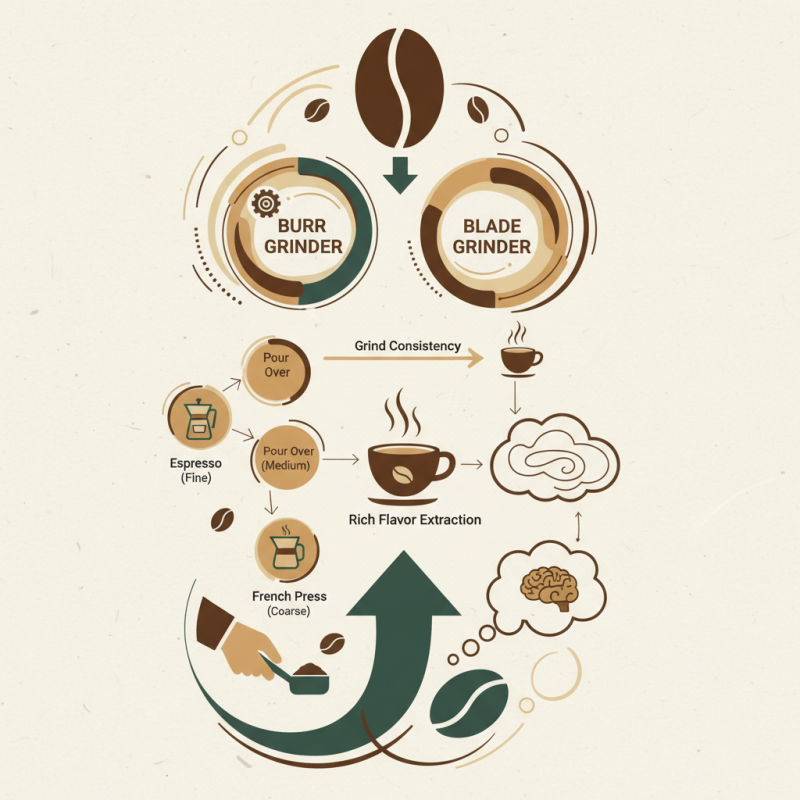
When selecting a grinder for coffee, it’s vital to understand the grinding requirements of different coffee types. The grind size impacts flavor extraction significantly. A recent study by the Specialty Coffee Association highlights that a finer grind is essential for espresso, while coarser grinds work best for French press coffee. This means that the choice of grinder should cater to your brewing method.
Medium grind is often used for drip coffee, striking a balance for full extraction without over-extraction. According to industry reports, the ideal grind for drip coffee is around 600 to 800 microns. Many home coffee enthusiasts ignore how grind consistency affects taste. Inconsistent grinds can lead to bitter or sour notes, which detract from the ideal flavor profile. Investing in a grinder that offers versatility in grind size is crucial for those enjoying various coffee types at home.
The grind time also matters. For example, many conical burr grinders can take 30 seconds or more for a fine grind. This may seem tedious, but it significantly improves the cup quality. Brands often boast about speed, but slower grind times generally foster better flavor extraction. Reflecting on how grinding affects your daily brew can lead to greater appreciation for the craft of coffee-making.
When selecting a coffee grinder, understanding key features is essential. Burr grinders are recommended over blade grinders. They provide a uniform grind size, crucial for consistent extraction. Research shows that coffee brewed from uniform particles tastes better. This is important for espresso and pour-over methods, where precision matters.
Another vital feature is grind size settings. A versatile grinder should offer various options, from fine to coarse. According to the Specialty Coffee Association, different brewing methods require specific grind sizes for optimal flavor extraction. For instance, espresso requires a fine grind, while French press coffee benefits from a coarse grind. Having this flexibility allows for experimentation.
Noise levels can also impact your decision. Some grinders operate quietly, making morning routines smoother. A study from the National Coffee Association indicates that many users prefer a quieter experience at home. Evaluating user reviews on noise can be helpful. Also, consider the hopper size. A larger hopper means fewer refills, which is convenient. However, unused beans may go stale over time, raising questions about freshness. Balance features with your brewing habits for an informed choice.
When selecting a grinder, understanding the difference between burr and blade options is crucial. Burr grinders use two revolving abrasive surfaces, providing a consistent grind. This consistency is essential for brewing great coffee. On the other hand, blade grinders chop beans unevenly, which can lead to a mixed flavor profile. For coffee enthusiasts, the choice becomes clear. A burr grinder is typically the better option for achieving a uniform grind.
Consider the grind size required for your brewing method. Different techniques need different particle sizes. For instance, espresso requires a fine grind, while French press needs coarser grounds. A good burr grinder allows you to adjust the size easily. While blade grinders can be cheaper and more accessible, they may hinder your coffee's flavor potential. Experimenting with a burr grinder can yield unexpected improvements in your morning cup.
Another tip is to evaluate the grinder's durability. Some models may not last long, resulting in added expenses. A well-constructed burr grinder may have a higher upfront cost, but it’s an investment. Think about the maintenance as well. Cleaning your grinder regularly can ensure longevity and better coffee quality. The journey to finding the right grinder may have bumps, but focusing on burr versus blade will lead to a better brew.
Adjustable grind settings are essential for brewing the perfect cup of coffee. Different coffee types require different grind sizes to optimize flavor extraction. A fine grind is ideal for espresso, while a coarser grind works best for French press. Having the ability to adjust your grinder allows you to fine-tune your coffee's taste. It can mean the difference between a muddy brew and a bright, aromatic cup.
Investing in a grinder with versatile settings can elevate your home brewing experience. Experimenting with grind sizes can lead to surprising discoveries about flavor profiles. However, not all grinders offer precise adjustments. Some may have vague settings that don't allow for exact measurements. This lack of consistency can be frustrating. Finding the right compromise between convenience and control is crucial.
Also, remember that the freshness of your beans impacts flavor. Even with the perfect grind, stale beans can ruin your experience. Regularly check your coffee supply to ensure the best taste. Sometimes, relying solely on adjustable settings for flavor can be misleading. Experimentation is key, and it’s important to reflect on your results. What works for one type may not for another. So, keep tasting and adjusting as you go along.
| Coffee Type | Recommended Grind Size | Grind Setting | Flavor Profile |
|---|---|---|---|
| Espresso | Fine | Adjustable | Rich, Intense |
| French Press | Coarse | Adjustable | Smooth, Full-bodied |
| Drip Coffee | Medium | Adjustable | Balanced, Clean |
| Turkish Coffee | Extra Fine | Adjustable | Strong, Bold |
| Cold Brew | Coarse | Adjustable | Smooth, Less Acidic |
| AeroPress | Fine to Medium | Adjustable | Versatile, Rich |
| Pour Over | Medium | Adjustable | Crisp, Bright |
| Moka Pot | Medium-Fine | Adjustable | Strong, Aromatic |
| Nitro Coffee | Medium-Coarse | Adjustable | Creamy, Smooth |
| Coffee Pods | Pre-ground | Fixed | Convenient, Consistent |
Maintaining your coffee grinder can greatly enhance its lifespan. Regular cleaning is crucial. Coffee oils and grounds can build up over time. This residue affects the taste and efficiency of your grinder. Use a soft brush to clear away fine particles monthly. For a deeper clean,
disassemble the grinder occasionally and wash the removable parts with warm soapy water.
Adjusting the grind settings is another key aspect. Over-grinding can create excess heat, which can damage the grinder. Some users face challenges with this, adjusting too frequently or too little. It’s wise to find a balance here. Remember, humidity and air quality can also impact the grinder’s performance. If your environment is too humid, consider storing beans in a sealed container to prevent clumping. Regularly check the burrs or blades for wear and replace them when necessary. These simple practices can ensure your grinder remains reliable for years to come.
: A finer grind is essential for espresso to ensure optimal flavor extraction.
Inconsistent grinds can lead to bitter or sour notes, affecting the overall taste negatively.
The best grind size for drip coffee is around 600 to 800 microns for full extraction.
Burr grinders provide a uniform grind size, crucial for consistent extraction and better tasting coffee.
Regular cleaning is necessary. Clean monthly and disassemble for a deeper clean every so often.
A larger hopper means fewer refills, but unused beans can go stale, affecting freshness.
Slower grind times usually result in better flavor extraction, despite being more time-consuming.
Humidity and air quality can affect the grinder's efficiency and the storage of beans.
Users often adjust grind settings too frequently or too little, which can harm flavor extraction.
Regularly check burrs or blades for wear. Replace them when they show signs of significant damage.
When considering how to choose a grinder for different coffee types, it's essential to understand the unique grinding requirements of each coffee. Different coffee types, from coarse French press to fine espresso, necessitate specific grind sizes to optimize flavor extraction. Key features in a coffee grinder, such as capacity, speed, and ease of use, play a vital role in achieving the perfect grind.
Additionally, the debate between burr and blade grinders underscores the importance of consistent results. Burr grinders generally offer superior control over grind size, which significantly impacts the final flavor of the coffee. Adjustable grind settings are also crucial, allowing you to tailor the grind to suit various brewing methods. Lastly, proper maintenance ensures the longevity of your grinder, helping you achieve the best coffee experience for years to come.

Sophia Electric Appliance