Adjusting grind settings is crucial for brewing the perfect cup of coffee. Different drinks require specific grind sizes to extract the best flavors. According to the Specialty Coffee Association, nearly 70% of coffee enthusiasts believe grind size impacts their brewing experience. “How to adjust grind settings for different drinks” requires understanding the characteristics of each drink. Expert barista Thomas K. once said, "Grinding is the first step toward flavor."
For espresso, a fine grind is essential. This enhances the extraction process and creates a rich crema. In contrast, a coarser grind suits methods like French press, which requires longer steeping times. The grind distributes flavor compounds more evenly. However, finding the ideal setting can be challenging. Too fine a grind can result in bitterness, while too coarse can lead to weak coffee.
Remember, each grinder behaves differently. Trial and error may be necessary to perfect your technique. It’s common to misjudge grind levels initially. Over time, adjustments will yield a beverage that truly satisfies. Understanding “how to adjust grind settings for different drinks” opens up a world of coffee enjoyment.
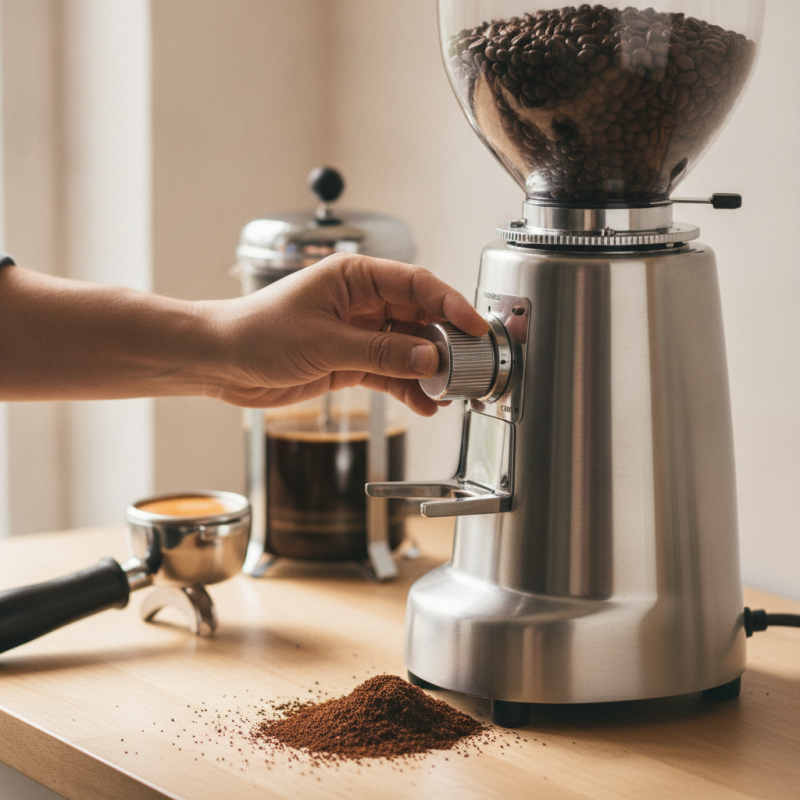
Understanding Coffee Grind Basics
Choosing the right grind size for your coffee is crucial. The grind affects not only the flavor but also the extraction process. Understanding grind basics can help you prepare better drinks. Coarse grinds work well for methods like French press, while fine grinds are best for espresso.
Tips: Experiment with different sizes. Pay attention to how the flavor changes. A coarser grind may produce a smoother taste, while a finer grind can lead to bitterness. Your brewing method guides the grind size.
Sometimes, it doesn't work perfectly. Maybe your espresso is sour, indicating a grind that’s too coarse. Or, your French press might taste too harsh, showing a grind that’s too fine. Adjust and taste until you find the balance that pleases you. Keep notes on your settings for future reference.
How to Adjust Grind Settings for Various Coffee Drinks?
| Coffee Drink |
Grind Size |
Brew Time |
Taste Profile |
| Espresso |
Fine |
25-30 seconds |
Rich, Bold |
| Pour Over |
Medium |
3-4 minutes |
Bright, Clean |
| French Press |
Coarse |
4 minutes |
Rich, Full-bodied |
| AeroPress |
Medium-Fine |
2-3 minutes |
Smooth, Sweet |
| Cold Brew |
Coarse |
12-24 hours |
Smooth, Low acidity |
The Role of Grind Size in Brewing Methods
Grind size significantly impacts the flavor and aroma of your coffee. Different brewing methods require unique grind settings.
A coarser grind works well for French press, allowing the coffee to steep longer. It prevents over-extraction, which can cause bitterness. Conversely, espresso demands a fine grind. This increases the surface area, allowing for quick extraction under pressure.
Tips: Experiment with different grind sizes. Start with a medium setting. Adjust incrementally to find your ideal flavor. Remember, too fine a grind can lead to a sour taste, while too coarse can result in weak coffee.
For pour-over methods, a medium to medium-fine grind is ideal. It promotes even extraction.
If the brew time is too short, your coffee may be under-extracted. If it's too long, the flavor may become overly bitter. Observing the brewing time is crucial. Adjust grind size accordingly.
Tips: Keep a log of your grind settings and results. This practice helps you understand your preferences. Small changes can lead to different tasting notes. Take your time to refine your approach. Enjoy the journey of finding your perfect cup.
Adjusting Grind Settings for Espresso
Adjusting grind settings for espresso is crucial for achieving the perfect brew. The right grind consistency directly impacts the extraction process and, subsequently, the flavor profile. According to the Specialty Coffee Association, a fine grind, typically between 200 to 300 microns, is ideal for espresso. This allows for optimal extraction within a short brewing time of 25 to 30 seconds.
Experimentation is often required. Many baristas recommend starting with a grind size on the finer end of the spectrum. However, too fine can lead to over-extraction, resulting in bitterness. Conversely, if the grind is too coarse, it may cause under-extraction, yielding a sour taste. It is essential to adjust based on freshness and roast level. A recent study found that fresher beans require slightly coarser settings to prevent overly bitter flavors.
Keep in mind, consistency is key. A burr grinder is typically preferred, as it provides uniform grind size. Small adjustments in grind size can significantly alter the espresso's taste. Monitoring brewing time and adjusting as necessary is vital. While experimentation is essential, relying solely on personal taste can be misleading. Regularly reviewing industry standards can help refine the process.
Optimizing Grind for French Press and Cold Brew
When it comes to French press and cold brew, grind settings play a crucial role in flavor extraction.
For French press, a coarse grind is ideal. This size allows for proper steeping.
It prevents over-extraction, which can make coffee bitter. The grounds need enough space to expand, enhancing the overall taste.
Experiment a bit with your coarseness. Too fine can lead to sludge at the bottom of the cup.
Cold brew requires a similar grind size but with some nuances. A very coarse grind is recommended.
This helps in brewing for an extended period, usually 12 hours or more.
The longer brew time means the coffee needs to be less fine. Otherwise, the result can be an overly strong or unpleasantly gritty coffee.
Pay attention to the water-coffee ratio as well. A common mistake is using too little coffee, leading to weak cold brew.
It's about striking that right balance. Each method demands attention and slight adjustments to achieve that perfect brew.
Experimenting with Grind for Pour Over and Aeropress
When it comes to brewing coffee with Pour Over and Aeropress methods, grind size plays a crucial role. The Specialty Coffee Association (SCA) recommends a medium grind for Pour Over and a fine grind for Aeropress. Recent studies indicate that grind size can impact extraction rates, significantly influencing flavor profiles. A finer grind increases surface area, enhancing extraction but can lead to bitterness if over-extracted.
In a 2022 industry report, researchers found that brewing time significantly correlates with grind size. For Pour Over, a medium grind should steep for about 3 to 4 minutes, while Aeropress typically brews for 1 to 2 minutes. Many enthusiasts have observed a noticeable variance in taste when adjusting grind settings. Experimenting can often lead to unexpected results, sometimes improving the cup, while at other times emphasizing undesirable flavors.
Consistency is key, yet many home brewers rely on a trial-and-error approach. There’s a learning curve involved; small adjustments in grind size can result in drastic changes to the coffee’s character. Some enthusiasts may overlook the importance of water temperature in tandem with grind size. This connection is essential, as the ideal temperature can further manipulate extraction levels. Engaging in experiments with both methods can deepen one’s appreciation for the complexities of coffee while highlighting areas for improvement.
FAQS
: Grind size significantly influences flavor and aroma. Coarse grinds suit French press, while fine grinds are better for espresso.
A coarse grind is ideal for French press. It helps prevent bitterness and allows proper steeping.
Steeping for 4 minutes is recommended. It balances extraction without overdoing it.
A fine grind can lead to sour coffee or sludge at the bottom. Adjusting size is essential.
A very coarse grind is recommended for cold brew. It should steep for at least 12 hours.
Start with a medium setting and log your changes. This helps identify your preferred flavor profiles.
A medium to medium-fine grind is best. It promotes even extraction and avoids under-extraction.
Brew time must match the grind. For pour-over, steeping for 3-4 minutes with medium grind is optimal.
Water temperature can influence extraction. Adjusting it along with grind size can enhance flavor.
Yes, small adjustments can drastically change flavor. Trial and error is common in mastering the process.
Conclusion
When it comes to brewing coffee, understanding how to adjust grind settings for different drinks is crucial for achieving the desired flavor and strength. The grind size plays a significant role in various brewing methods, influencing extraction time and overall taste. For espresso, a fine grind is essential for optimal extraction, while a coarser grind is better suited for methods like French press and cold brew, where longer steeping times are involved.
Additionally, experimenting with grind settings for pour-over and Aeropress techniques can lead to unique flavor profiles, as these methods often require a medium grind to balance the extraction rate. By mastering how to adjust grind settings for different drinks, coffee enthusiasts can enhance their brewing skills and tailor their beverages to meet personal preferences.

 Sophia Electric Appliance