Global coffee equipment buyers now face a crowded market, from compact espresso machines to automated grinders and batch brewers. The question is no longer only about pressure, temperature, or attractive stainless steel. It is also about documented safety, verified manufacturing, and reliable after-sales support. So, what certifications should good coffee equipment have?
This 2026 guide examines the credentials that matter across international purchasing decisions. NSF/ANSI standards can support hygiene and food-contact safety in commercial equipment. UL, ETL, or equivalent marks may indicate tested electrical safety, depending on the destination market. CE marking, RoHS compliance, and electromagnetic compatibility documentation are also important for many European transactions. However, buyers should verify the exact model, certificate number, testing scope, and issuing body. A logo alone proves little.
Industry evidence reinforces this cautious approach. The International Coffee Organization’s Coffee Report and Outlook tracks supply, consumption, and market volatility, showing why equipment buyers need dependable long-term planning. USDA Foreign Agricultural Service Coffee: World Markets and Trade reports also demonstrate the scale and complexity of global coffee production. Meanwhile, specialty coffee research from the Specialty Coffee Association emphasizes consistency, sustainability, and professional performance. These priorities reach the equipment counter: a brewer that loses three degrees during service can affect every cup and every customer review.
Certification is not the entire answer. That is the uncomfortable part. Installation quality, water filtration, calibration records, spare-parts access, and technician training can matter just as much. This article compares practical certifications and overlooked purchasing checks, helping global buyers separate meaningful assurance from polished marketing.
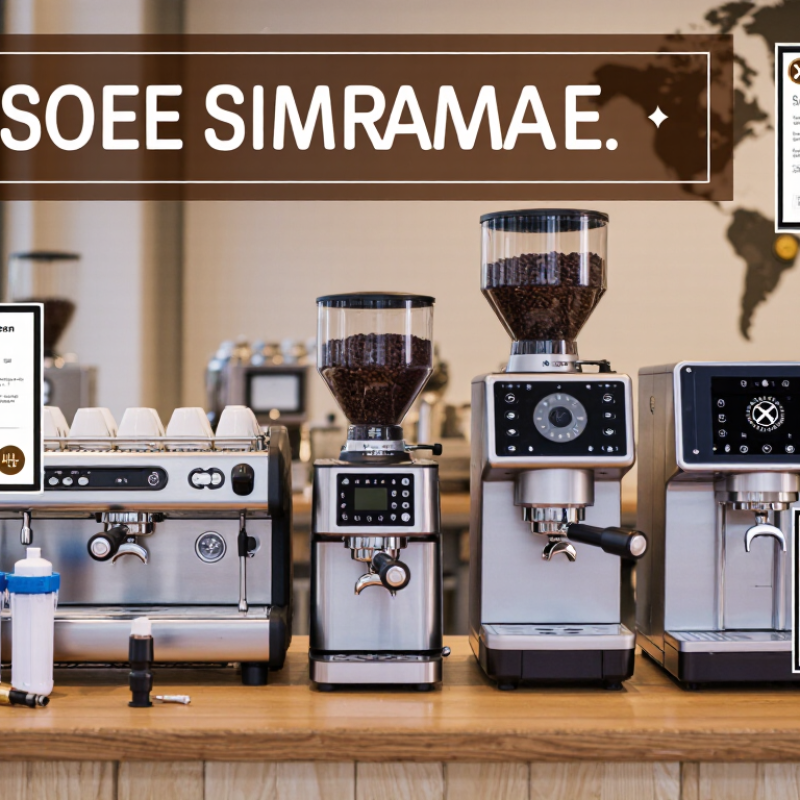
What Coffee Equipment Certifications Mean for Global Buyers
For global buyers, coffee equipment certification is not a decorative logo. It is evidence that a machine meets defined safety, hygiene, electrical, or environmental requirements. That distinction matters. A conformity mark may cover one voltage, model, or factory only. Buyers should check the certificate number, testing laboratory, product scope, and validity date before signing a purchase order.
Demand makes this verification important. The International Coffee Organization estimated global coffee consumption at 177.9 million 60-kilogram bags in 2023/24. The United States Department of Agriculture’s Coffee: World Markets and Trade report also forecast global production near 176 million bags for 2024/25. More cafés and processing sites mean more imported grinders, brewers, boilers, and water systems. A certificate can reduce customs delays, but it cannot guarantee consistent extraction or long service life.
The practical checklist depends on the destination. Electrical safety evidence, electromagnetic compatibility testing, food-contact compliance, and restricted-substance declarations may each apply. Hygiene-focused buyers should review sanitation materials and cleanability, not only electrical marks. Ask whether testing followed the current standard edition. Ask for factory-level quality records, too. ISO 9001 certification can indicate controlled processes, but it does not certify every machine’s performance.
Paper is not proof. I have seen procurement teams trust a familiar logo while missing voltage differences, unsuitable plugs, or incomplete local documentation. Certification reduces uncertainty; careful inspection finishes the job.
Key Safety, Quality, and Performance Certifications Explained
For global coffee buyers, certification is a practical risk filter, not a decorative logo. Electrical equipment should show a recognized safety mark, such as UL, ETL, CE, or UKCA, depending on the destination market. These marks indicate testing against electrical, fire, and mechanical requirements. However, requirements differ by country.
Food-contact surfaces deserve equal attention. NSF/ANSI 4 covers commercial cooking equipment, while NSF/ANSI 51 addresses food equipment materials. For brewing systems, check stainless-steel grades, seal materials, and temperature controls. RoHS documentation can confirm limits on restricted substances. The IEC 60335 series also provides useful safety references for household and similar electrical appliances. The European Commission’s 2024 Safety Gate report continued to identify electrical appliances as a notable product-risk category. That matters when a machine operates near water every day.
Tips: Request the certificate number, test standard, testing laboratory, and current validity date. Match the certificate with the exact model, voltage, plug, and production version. A supplier’s PDF alone is not enough. Verify it through the issuing body when possible.
Performance claims need evidence. Ask for extraction temperature records, warm-up time, pressure stability, and energy data. The International Coffee Organization reported global coffee consumption of about 177.3 million 60-kilogram bags in 2023/24. Rising demand increases pressure on equipment reliability. Still, certification does not guarantee perfect field performance. Real kitchens are humid, rushed, and poorly maintained. I would treat laboratory approval as a strong starting point, not the final decision.
2026 Best Coffee Equipment Certifications for Global Buyers
Key safety, quality, hygiene, EMC, and environmental compliance standards for international purchasing decisions.
Scope indicator: 1 means the standard or conformity route directly addresses the category; 0 means it is not its primary purpose. IEC 60335 standards focus on electrical safety, EN 55014 addresses electromagnetic compatibility, NSF/ANSI standards support food equipment and food-contact requirements, ISO 9001 covers quality management systems, and EU RoHS restricts specified hazardous substances. Exact requirements depend on product type, market, voltage, materials, and intended use.
How Certifications Differ Across Major International Markets
2026 Best Coffee Equipment Certifications for Global Buyers?
Coffee equipment compliance changes sharply by market. The International Coffee Organization estimated global consumption at about 177 million 60-kilogram bags in 2022/23. That scale increases scrutiny of commercial machines, grinders, boilers, and water systems. In the European Union, buyers usually check CE conformity, electromagnetic compatibility, RoHS limits, and food-contact rules. The EU food-contact framework requires materials to avoid harmful migration. CE is not a quality award. It is a manufacturer’s conformity declaration, and weak documentation can still create procurement risk.
The United States often requires electrical evaluation through an accepted testing laboratory. Food-service buyers may also request sanitation certification under relevant NSF/ANSI standards. Japan uses PSE requirements for many electrical products, while Australia commonly relies on RCM registration for electrical safety and electromagnetic compatibility. These systems are not interchangeable. An IEC test report can support approval, but local deviations may remain. The International Energy Agency’s Energy Efficiency 2024 report highlights continuing pressure to reduce energy use, making standby consumption and heat recovery useful purchasing evidence.
Tips: Ask for the certificate number, test scope, factory model, and expiration status. Confirm whether the document covers the exact voltage and plug. I have seen buyers accept a family certificate without checking one small component. That mistake is expensive. Also request food-contact declarations, cleaning instructions, spare-parts support, and a traceable technical file. Certification proves limited compliance, not durability, repairability, or consistent extraction. That distinction deserves more attention.
Steps to Verify Certification Claims from Coffee Equipment Suppliers
Before buying coffee equipment in 2026, verify every certification claim directly. The International Coffee Organization reported global coffee consumption at about 177 million 60-kilogram bags in 2022/23. That scale increases pressure on suppliers to prove safety, durability, and export readiness.
Ask for the complete certificate, not a cropped logo. Check the certificate holder, factory address, product model, testing standard, issue date, and expiration date. Then search the issuing body’s public database or contact its verification office. A valid ISO 9001 certificate confirms a quality-management system, not automatic product safety. The ISO Survey 2023 recorded more than 1.2 million ISO 9001 certificates worldwide, so document comparison matters.
Match the certificate to the exact machine. A test report for one grinder does not cover every model. Check electrical ratings against the destination market, especially voltage, plug type, and frequency. For food-contact parts, request material declarations and migration-test evidence. For commercial equipment, confirm applicable sanitation and electrical standards with an independent laboratory. Keep the supplier’s declaration, laboratory report, and purchase specification together.
Look for gaps.
A supplier may provide a genuine certificate with an outdated address or unrelated model number. That mistake is easy to miss. I would also request shipment photos showing the rating plate and serial number. Certification databases can contain delays, and smaller suppliers may explain evidence poorly. Recheck critical documents before payment, not after installation.
How to Choose Certified Equipment for Specific Buying Requirements
Choosing certified coffee equipment starts with the purchase requirement, not the certificate name. A busy café may need stable output, quick recovery, and simple cleaning. A hotel buyer may value quiet operation and documented energy performance. Export orders add voltage, plug, language, and service concerns. In procurement work, I have learned that one certificate rarely proves suitability. Check whether an independent, competent body issued it. Confirm the certificate number, scope, testing date, and applicable standard. Ask whether the exact model is covered, rather than a similar series. Paperwork is not performance.
Tips: Build a requirement sheet before comparing suppliers. List hourly capacity, power supply, water quality limits, temperature accuracy, footprint, and maintenance access. Request test reports, conformity documents, installation instructions, and spare-parts policies. Verify food-contact materials where relevant. Ask for evidence. Check the local importer or service partner, too. A valid certificate cannot repair delayed maintenance or unavailable parts.
During evaluation, request a live demonstration under realistic conditions, including peak demand and cleaning cycles. Record brew temperature, recovery time, noise, and operator steps. Compare results with the certified specifications. Certification may confirm safety, but it may not confirm taste, workflow, or total ownership cost. I would leave room for doubt. Measurements can change with water chemistry, calibration, and staff habits. Have a qualified technician review electrical and installation requirements before purchase. Keep every document linked to the shipped model and serial number. This creates a traceable buying record.
FAQS
Certification helps filter electrical, fire, and mechanical risks. It is not decoration. Machines often operate near water, heat, and rushed workers.
Request the complete certificate, test report, and supplier declaration. Check the model, factory address, issue date, and validity date. A cropped logo proves very little.
Search the issuing body’s public database when possible. You can also contact its verification office directly. Keep screenshots and email records. Small details matter.
Yes. The document should match the model, voltage, plug, frequency, and production version. A report for one grinder may not cover another model. This mistake is surprisingly common.
Ask for material declarations and migration-test evidence. Review stainless-steel grades, seal materials, and temperature controls. Inspect the brewing path, not only the outer casing. The inside matters more.
No. It usually confirms a management system, not complete product safety. Separate electrical, sanitation, and food-contact evidence remains necessary. I would not confuse paperwork with performance.
Ask for extraction-temperature records, warm-up time, pressure stability, and energy data. Request repeated test results, not one impressive sample. A busy kitchen may perform differently. Laboratory results are only a starting point.
Request shipment photos showing the rating plate and serial number. Compare them with the certificate and purchase specification. Watch for outdated addresses or unrelated model numbers. Recheck everything before payment.
Conclusion
For global coffee equipment buyers, certifications are essential indicators of safety, quality, performance, and regulatory readiness. They help confirm that machines and supporting components have been tested against recognized standards for electrical safety, food-contact materials, energy efficiency, sanitation, durability, and workplace protection. Buyers should also understand that certification requirements vary by market, so equipment accepted in one country may need additional testing or documentation elsewhere. The key question is: What certifications should good coffee equipment have? The answer depends on the equipment type, installation environment, intended use, and destination market.
Before purchasing, buyers should request current certificates, test reports, product labels, and declarations of conformity from suppliers. These documents should match the exact model, configuration, and manufacturing details, and their validity should be checked through an authorized certification database or issuing organization. Finally, selecting certified equipment requires balancing compliance with capacity, performance, maintenance needs, energy use, after-sales support, and total operating cost. A careful verification process reduces risk and supports reliable international purchasing decisions.

 Sophia Electric Appliance